Loading departure…
Loading departure…
Loading departure…
Loading departure…
Loading departure…
Loading departure…
Loading departure…
Loading departure…
Loading departure…
Loading departure…
four steps · roughly fifteen minutes
Every active ship. Every itinerary. Every open cabin. Visible in one place, in real time, with the operators who run them. No travel agents. No commissions. No phone calls.
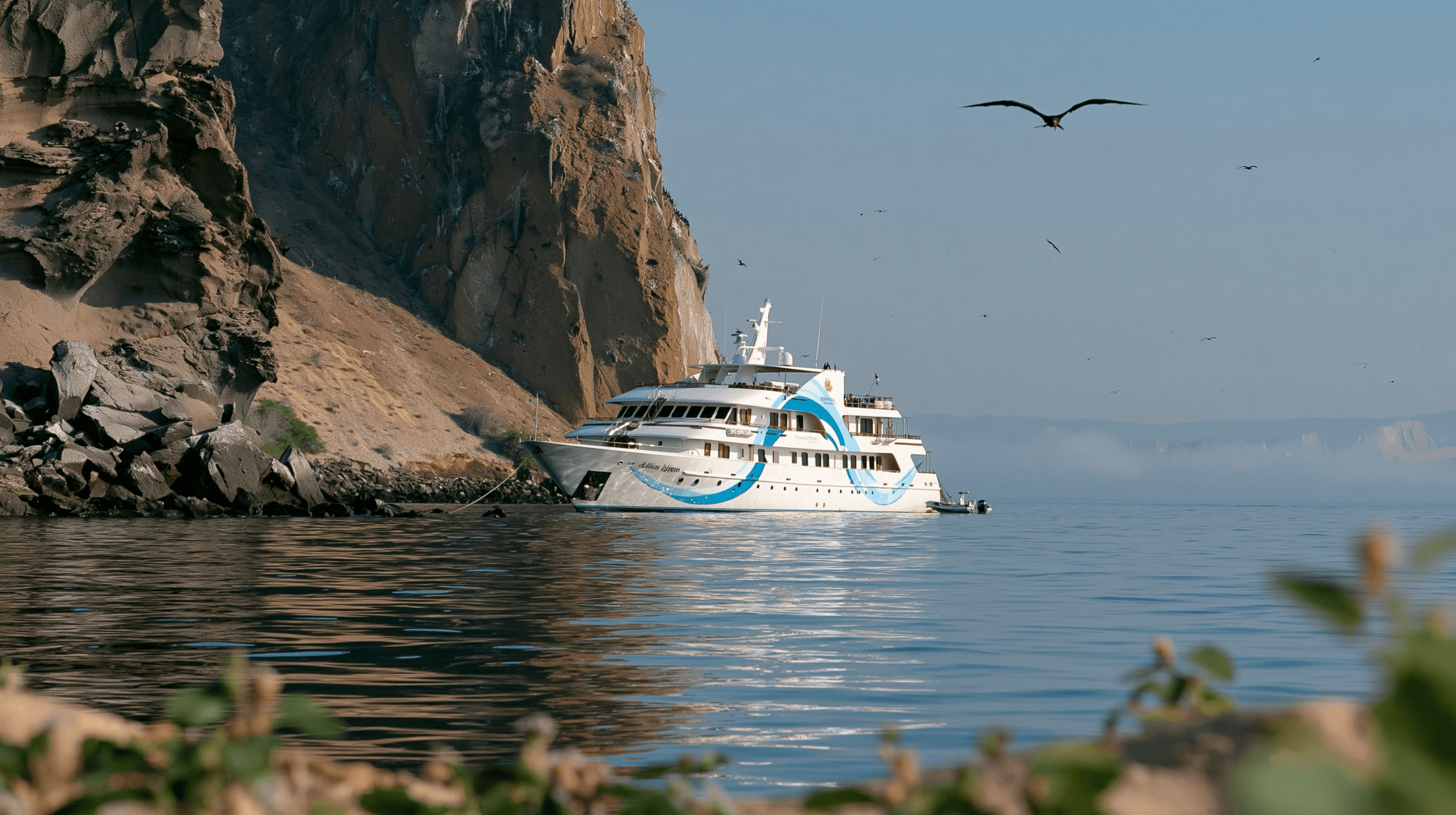
Most Galápagos cruises are sold three ways. Travel agents take phone calls and a commission. Single-operator sites show only their own ships. Last-minute sites publish static lists of cabins that may already be gone. None of those models lets a traveler see every active ship, every itinerary, and every open cabin in one place, with a direct line to the operator running the boat.
Book Cruise Now occupies the empty quadrant. Deep, because every page is built around the Galápagos and nothing else. Direct, because the inquiry goes to the operator who runs the ship, not to a middleman. The platform makes the introduction and steps aside.
This is not a marketing claim. It is structural. There is no commission to inflate. There is no agent to gate the conversation. There is no inventory hiding in a back office. The site cannot do those things even if the team wanted to.
| Booking model | Who you talk to | What you see | When you see it |
|---|---|---|---|
| Travel agent | An agent | Their selected ships | After a phone call |
| Single-operator site | The operator | Their own ships only | In real time |
| Last-minute site | A reseller | A static list | Updated weekly at best |
| Book Cruise Now | The operator directly | Every active ship and open cabin | Live, every page load |
Booking model
Travel agent
Booking model
Single-operator site
Booking model
Last-minute site
Booking model
Book Cruise Now
step 01
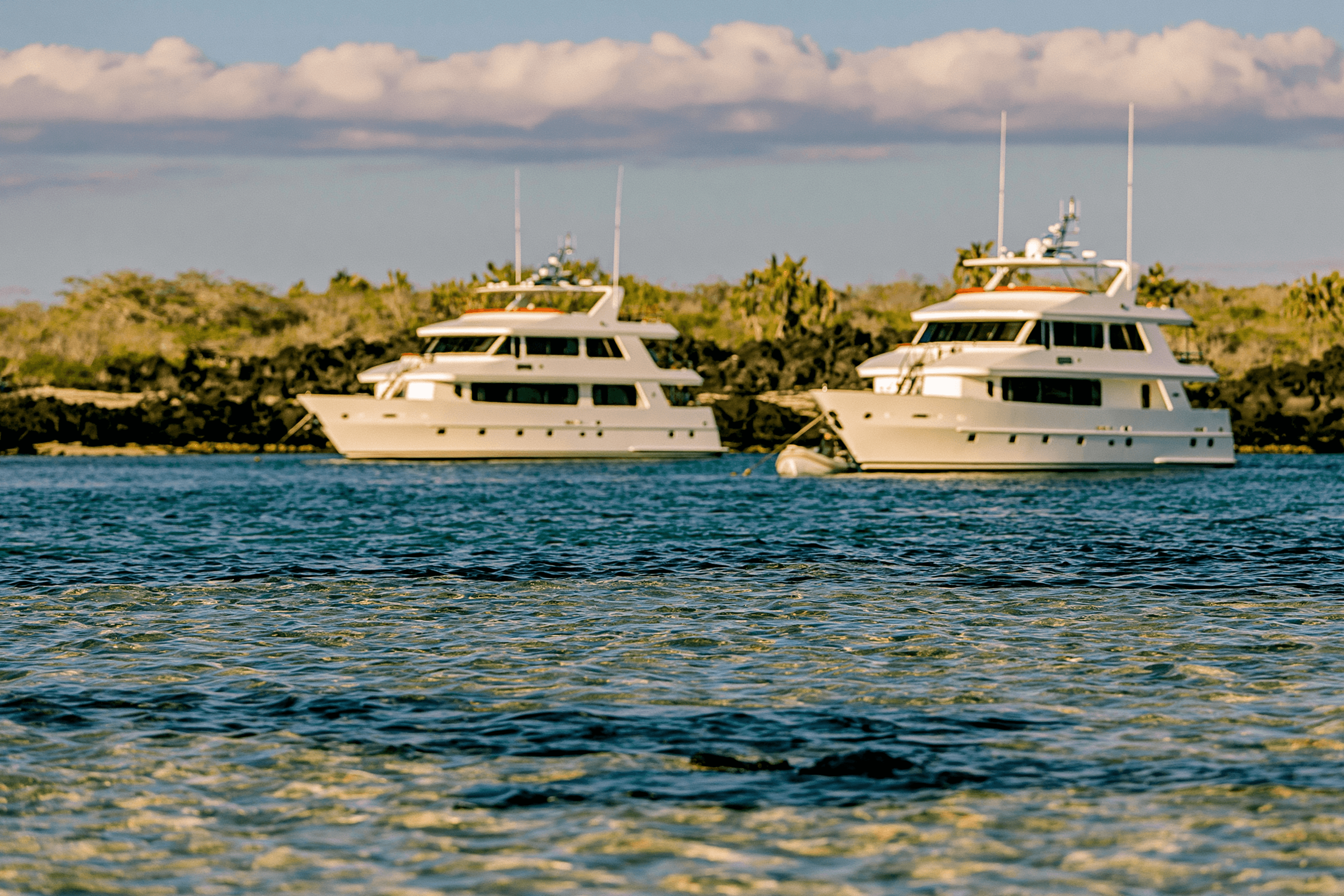
The Galápagos cruise fleet is roughly seventy ships. Ecuador's 1998 Special Law capped it there and has not raised the cap since. Every active vessel that holds a current Galápagos National Park permit and accepts public bookings is on this site, with its real itinerary, its real capacity, and its current departure calendar. No featured-listings tier. No paid placement. The default sort is whatever the traveler asks it to be: by date, by ship, by price, by single-supplement availability, by sailing duration.
42 active ships
The cap is structural. Every one of them is browsable.
1:16 naturalist guide ratio
A park rule, enforced on every landing, on every ship. The same minimum quality floor applies whether the boat carries 16 passengers or 100.
~767 berths per night across the fleet
The reason last-minute openings are real and rare. Inventory is finite by law.
step 02
Operator-defined tiers like "first class" are inconsistent across the fleet and do not map cleanly to the experience. The variables that do are documented in the five-variable framework: hull type, passenger count, itinerary license, minimum age, and what is bolted to the rate. Filter on the variables. Read the side-by-side. The comparison surface is the same data the operators see internally. Nothing is filtered out because it is unflattering.
Hull size beats hull shape
A larger monohull with stabilizers usually rides smoother than a small catamaran. The catamaran-equals-stable claim is the most common myth in this category.
Itinerary is the binding constraint
Each ship holds a single fixed 15-day Park-permit route. Once you have chosen your islands, the eligible fleet often shrinks to five or ten ships.
All-in cost is not the brochure fare
Park fees, transit card, domestic flight, gratuities, and tier-dependent extras add roughly 30 percent on most ships. The site quotes both numbers, side by side.
step 03
Every inquiry submitted on Book Cruise Now goes to the shipowner who runs the boat. Their reservations team, their inbox, their voice. The inquiry includes the cabin or itinerary the traveler is looking at, the dates, and any questions. The operator's reply lands in the traveler's inbox, not BCN's. The platform's job is the introduction. After that, the conversation belongs to the people who actually run the operation. Most replies arrive within six hours; some arrive within the hour, depending on the operator and the time zone.
~70 percent of travelers contact one ship
Most Galápagos shoppers are Galápagos-decided and ship-decided by the time they inquire. The model is built around that pattern.
6 hour median reply
Operators answer in their own voice. We do not paraphrase or relay; the email comes from them.
No commission, no clipping
BCN does not take a percentage of the booking. The operator quotes the same price they would quote on a phone call.
step 04
The deposit is processed directly to the operator. The shipowner's reservations team sends a confirmation, the cabin assignment, and a pre-departure schedule. BCN sees that the booking happened; BCN does not sit between the traveler and the operator on payment. Free cancellation windows, deposit terms, and balance-due dates are stated on the booking page itself, not buried in a policy document. Every restriction is paired with the reason for it.
Deposit goes to the operator
Direct payment to the shipowner. SSL-encrypted, processed by Stripe. The funds support the people running the operation.
Free cancellation until a specific date
Stated as a date, not a vague window. The exact retention math after that date is itemized.
Confirmation comes from the operator
The post-booking email comes from the shipowner's reservations team. We are copied; we do not author it.
No countdown timers.
A Galápagos cruise is not a flash sale. The cabin is either available or it is not, and we say which one in plain language.
No "only X cabins left" theater.
When real-time inventory shows a single cabin remaining, we say so factually, once. We do not flash it.
No commission-weighted rankings.
Default sort is whatever the traveler asks for. There is no preferred-ship surface for ships that pay BCN more, because no ship pays BCN more.
No fake urgency.
No "book before prices increase." Galápagos prices move on a schedule the operator controls; BCN is not in a position to manufacture a deadline.
No phone-call gating.
The whole site is browsable, comparable, and bookable without a single phone call. If a traveler wants to talk to a human, the operator's phone number is on every ship page.
No buried fees.
Park fee, transit card, gratuity guidance, and the typical 30 percent all-in uplift are documented in the same place as the brochure fare.
The Galápagos cruise booking does not end at the deposit. Some travelers book six months out; others find a cabin a few days before departure. The pre-departure window — long or short — is when the operator earns the trust the website only gestured at. The milestones below describe a typical longer-window booking; same-week travelers see most of them collapse into a single email.
day 0
Confirmation.
The operator sends the booking confirmation, the cabin assignment, and a pre-departure briefing PDF. Includes packing list, what to expect at Quito or Guayaquil, the GPS or SCY transfer plan, and the operator's direct contact.
-60 days
Balance due.
Most operators schedule the balance payment between 60 and 90 days out. The exact date and amount were already shown on the booking page; the email is a reminder, not a surprise.
-30 days
Final logistics.
The operator confirms domestic flight blocks if applicable, hotel transfers, dietary requests, and any pre-cruise hotel nights. Travelers traveling with children get the family-week schedule.
-7 days
Pre-departure call or message.
Operator-dependent. Some send a personal note from the office; others have a reservations lead reach out. The form varies; the existence of the contact does not.
day 1
Welcome aboard.
The operator's ground crew or naturalist guide meets you at the airport gate or on the panga, depending on the ship. The naturalist guide does the first briefing the same evening.
day 8
Disembarkation.
The operator transfer takes you back to GPS or SCY. BCN sends a single follow-up: a request for an honest review, with no follow-on marketing.

Marc Patry worked at the Charles Darwin Research Station from 1998 to 2002 — the four years immediately after Ecuador's Special Law capped the cruise fleet. His son Emile was born in Puerto Ayora in 1999 and has returned to the islands most years since. Two decades of comparing ships, answering forum questions, and walking visitor sites with naturalists added up to a single observation: planning a Galápagos cruise should not be this hard, because the structural information needed to do it well already exists. Book Cruise Now is that information, organized, kept current, and connected to the operators who run the ships.
The platform stands on its own merits. The family story is context, not proof. The proof is in the next four steps you take.
More on the family story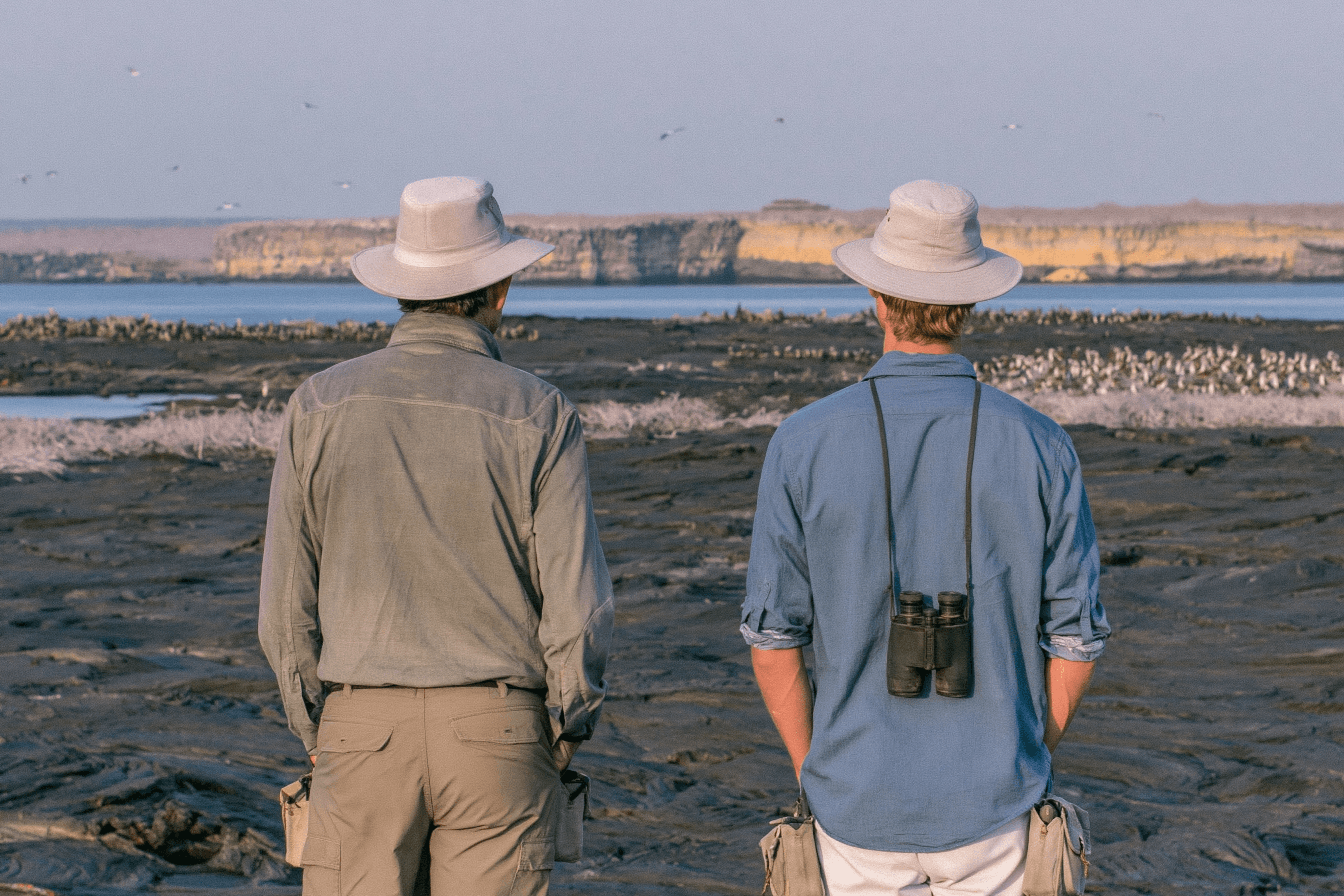
Open the fleet, filter on the variables that matter, and inquire with the operator that fits. The platform is the introduction. The voyage is yours.