How to Choose the Right Galapagos Cruise Ship
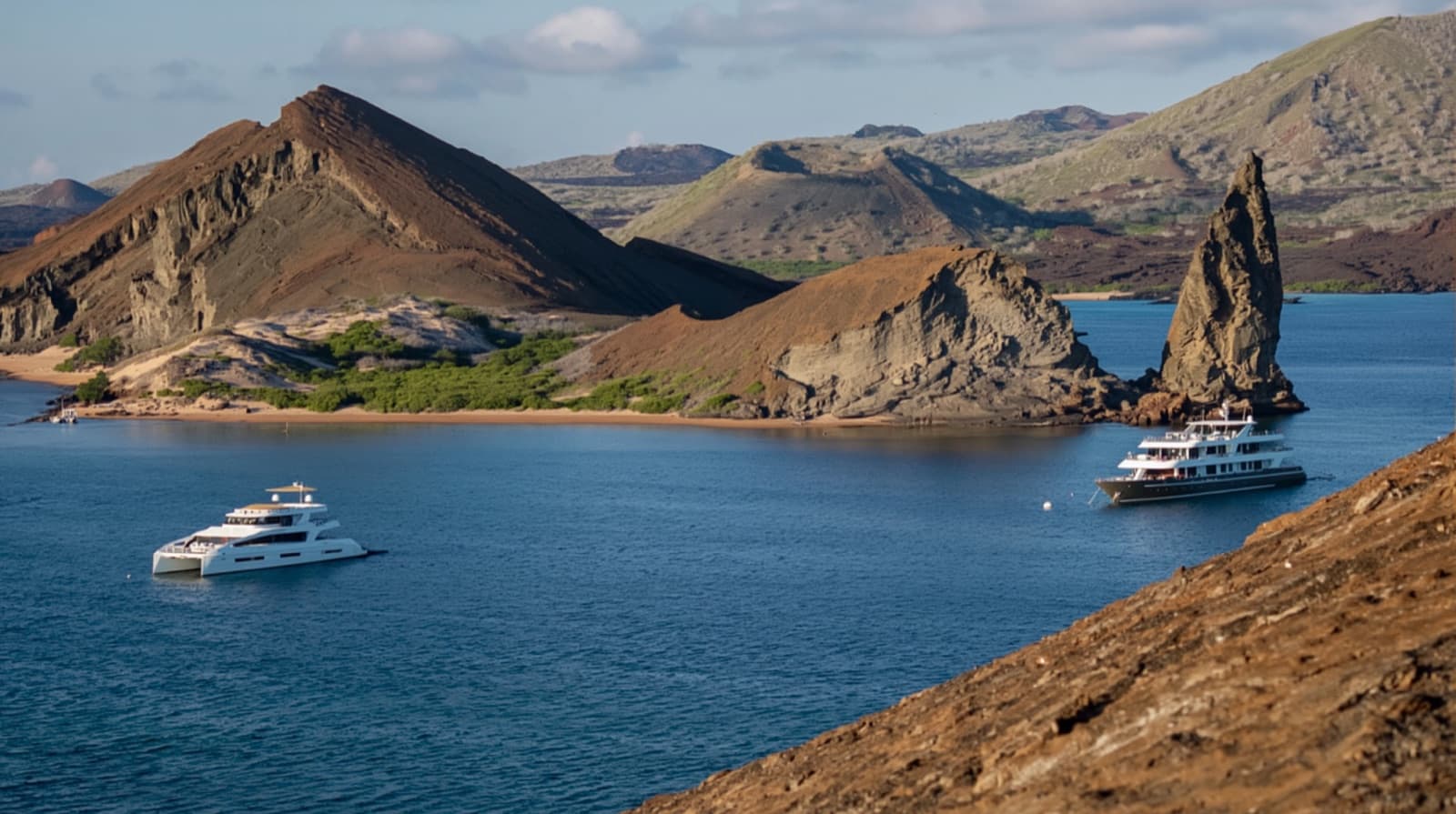
Direct answer first. Pick the ship around four constraints in this order: size class, persona match (solo, family, photographer, or diver), seasickness tolerance, and budget tier. The widely repeated catamaran-equals-stable assumption is wrong; in open Pacific swell, hull size beats hull shape. The Galapagos has roughly 70 authorised expedition vessels. They are not interchangeable, and the ship matters more than the itinerary.
The decision matrix
| If… | You should probably… |
|---|---|
| You want intimate guiding, a flexible itinerary, and dawn pangas at remote landings; you’re not seasick-prone or mobility-limited; you value pace over amenities | Pick a small ship (16–20 passengers) |
| You’re a first-timer who wants the balance: hotel-grade public spaces, a larger naturalist team, and enough mass to ride a swell without losing the expedition feel | Pick a mid-size ship (40–48 passengers) |
| You’re seasick-prone, mobility-limited, or travelling with a family that wants amenities and accessibility; you accept slightly more queueing on landings as the trade-off | Pick a large ship (90–100 passengers) |
Every row below expands one of these constraints, then layers them.
Catamaran or motor yacht: which is more stable?
The forum-standard answer is that catamarans are more stable than monohulls. In the open swell that defines a Galapagos cruise, this is wrong more often than it is right. The variable that matters is hull size, not hull shape. A 100-berth monohull (Celebrity Flora at 100, NG Endeavour II at 96, Santa Cruz II at roughly 90, Galapagos Legend at roughly 90) carries enough mass and waterline length to dampen pitch and roll across the same crossing where a 16-berth catamaran will hobby-horse and corkscrew.
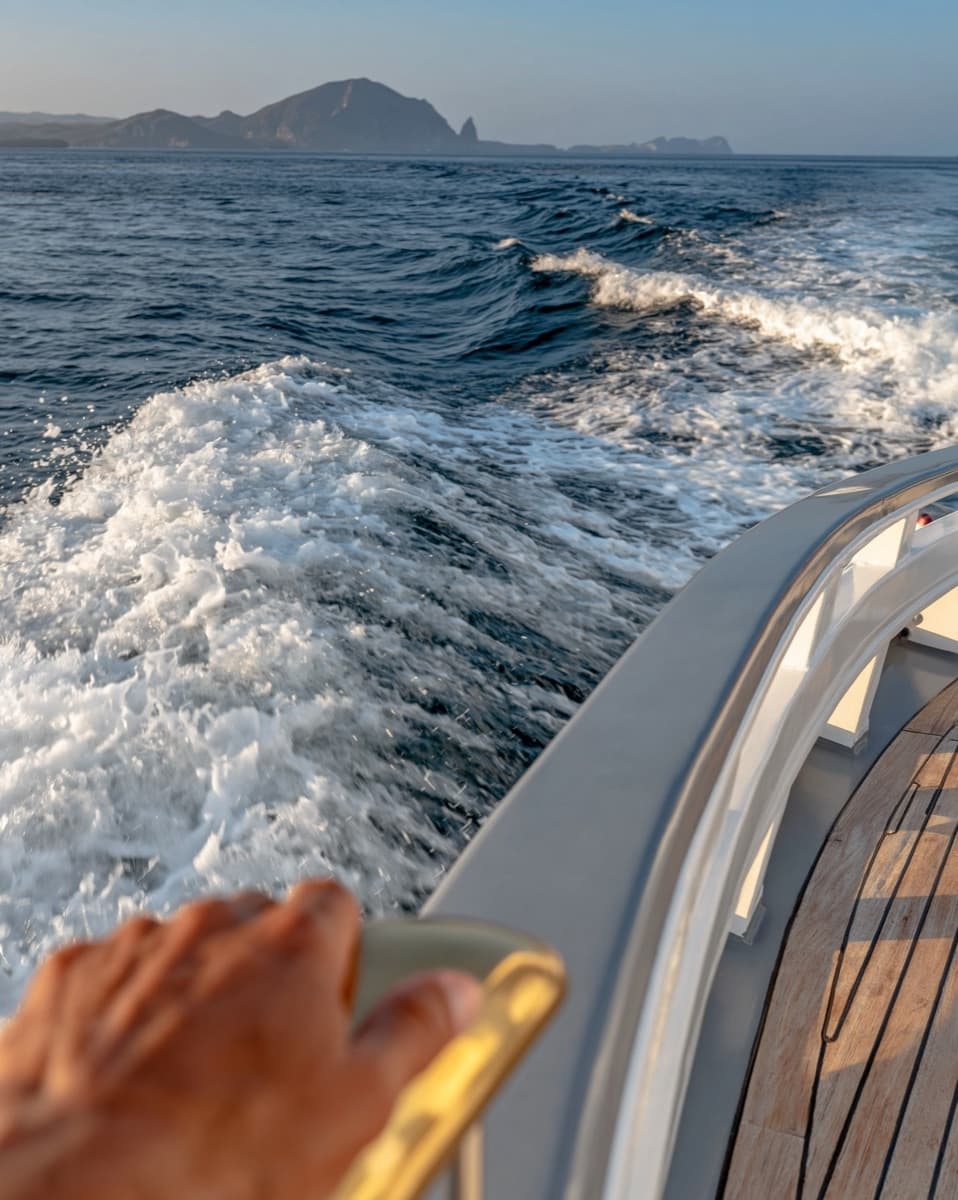
Two motions matter: roll (port to starboard, side to side) and pitch (bow to stern, up and down). Catamarans resist roll because the deck spans two widely spaced hulls. They do not resist pitch; the short waterline length of each pontoon lets the bow drop and rise more sharply. Large monohulls resist both because they are longer, heavier, and ride deeper. In the open-water transits that define inter-island travel, pitch is the discomfort. That is why a December-to-May cruise on Celebrity Flora rides smoother than the same week on a 16-berth catamaran in the same swell.
The honest caveat: catamarans do reduce port-to-starboard roll in calm anchorages. If most of a Galapagos cruise were spent at anchor in flat water, a catamaran would feel more stable. Most of it is not. The roughest segments are open crossings: the long northern transits to Genovesa, the western circuit through the Bolívar Channel between Isabela and Fernandina, and the southern crossing to Española. In swell, the metric is mass and length. Two short pontoons under 16 berths have neither.
Operators marketing catamarans as the stable option are not lying; they are quoting the calm-water case. In a Galapagos brochure, that is rarely the relevant case.
Small ship or large ship: which is better?
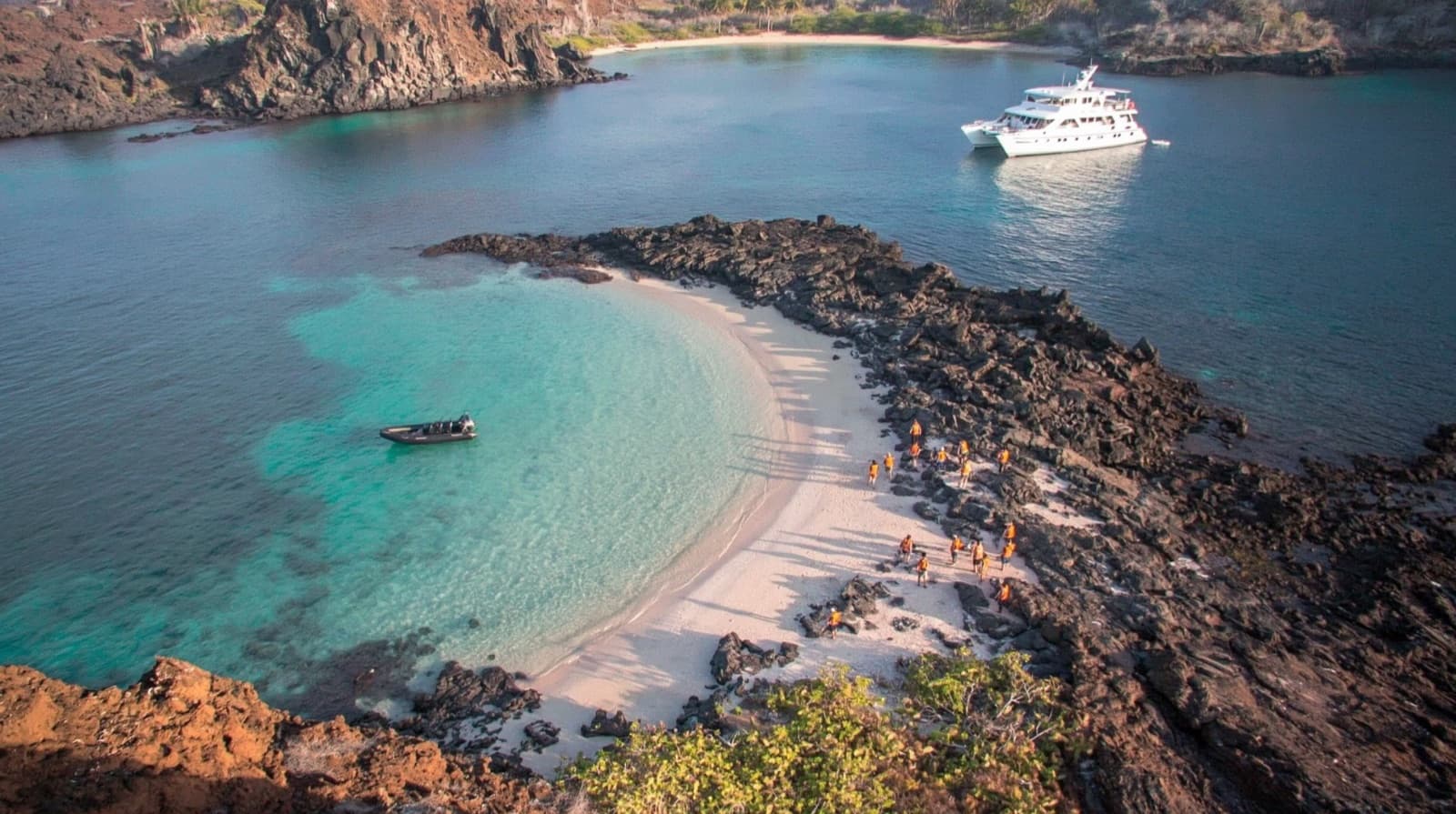
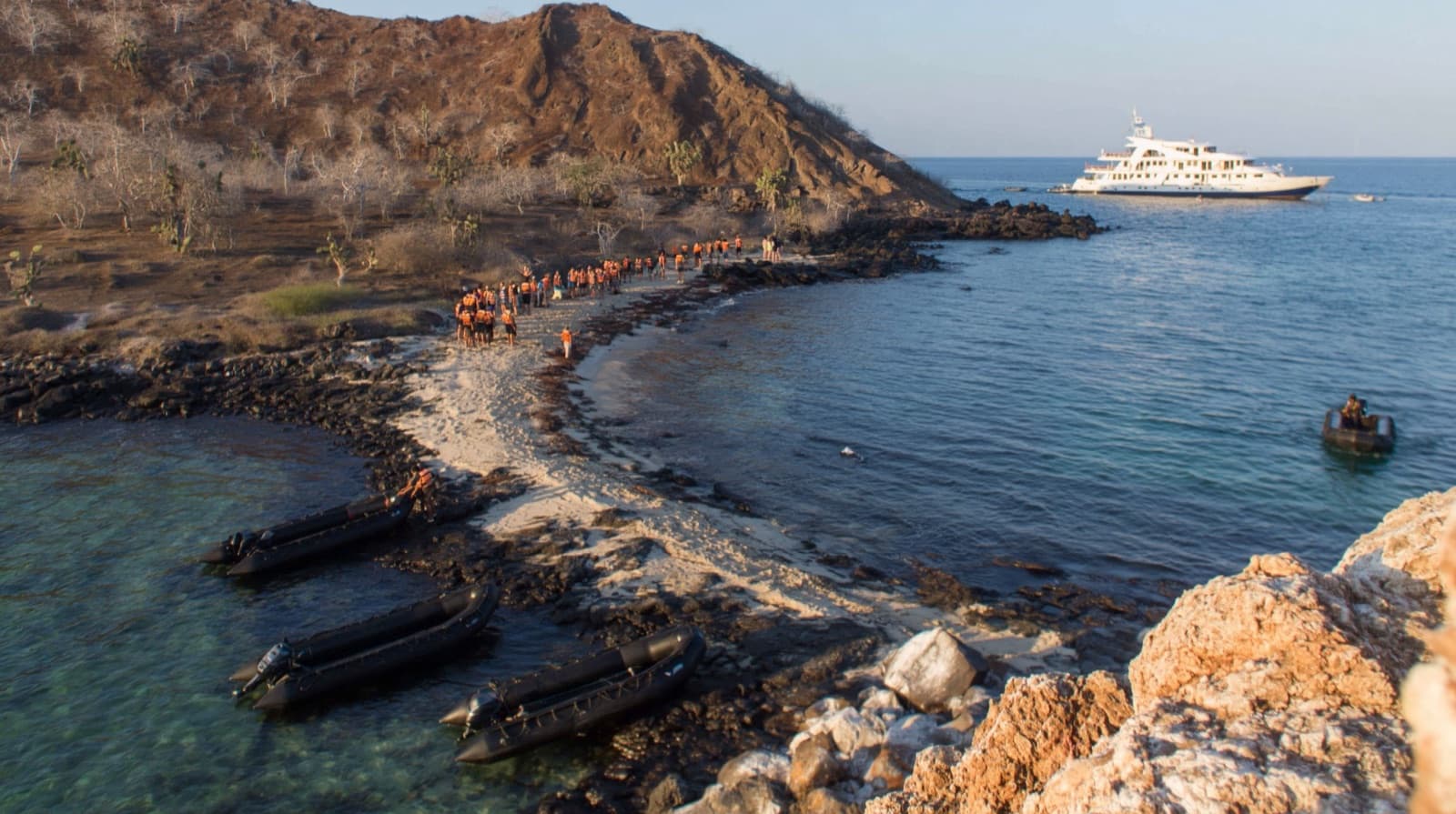
On most travel forums the consensus is unambiguous: always go small. The argument is real. Sixteen-berth ships dock at remote landings without panga queues, the naturalist guide knows every passenger’s name and shooting list by day two, and the itinerary can flex around the wildlife rather than the timetable. Treasure of Galapagos, Samba, Tip Top II, Yolita II, and Nemo III sit in this band, all between 16 and 20 passengers.
The caveat the small-is-always-better answer skips: small ships are not the right call for travellers who get seasick, who have mobility constraints, or who want hotel-grade amenities. A 16-passenger catamaran has limited deck space, no stabilisers worth the name, and small-cabin geometry that gets uncomfortable in any kind of swell. Public spaces double up depending on the hour. There is no separate dining room, no fitness room, no lift.
The mid-band (40–48 passengers) is where most first-timers belong, and it is where the consensus answer is most often wrong. Endemic, La Pinta, and Isabela II carry roughly 40–48 passengers across two or three naturalist guides, with cabin layouts and public spaces closer to a small hotel than a yacht, and enough mass to ride a swell.
The large band (90–100 passengers) would be considered small everywhere else; in the Galapagos it is the upper end. NG Endeavour II carries 96; Santa Cruz II roughly 90; Galapagos Legend roughly 90; Celebrity Flora 100. The trade-off is real: more passengers on a landing means slightly more queueing for pangas, and the guide-to-traveller ratio sits closer to 1:16 than 1:8. The upside is the only thing that actually fixes severe motion sickness, plus accessible cabins, lifts, dedicated dining, and itineraries that can include the long northern crossings to Genovesa and the southern run to Española without breaking the trip.
The forum answer is right for most travellers. It is wrong for the ones who need it to be wrong.
Can children go on a Galapagos cruise?
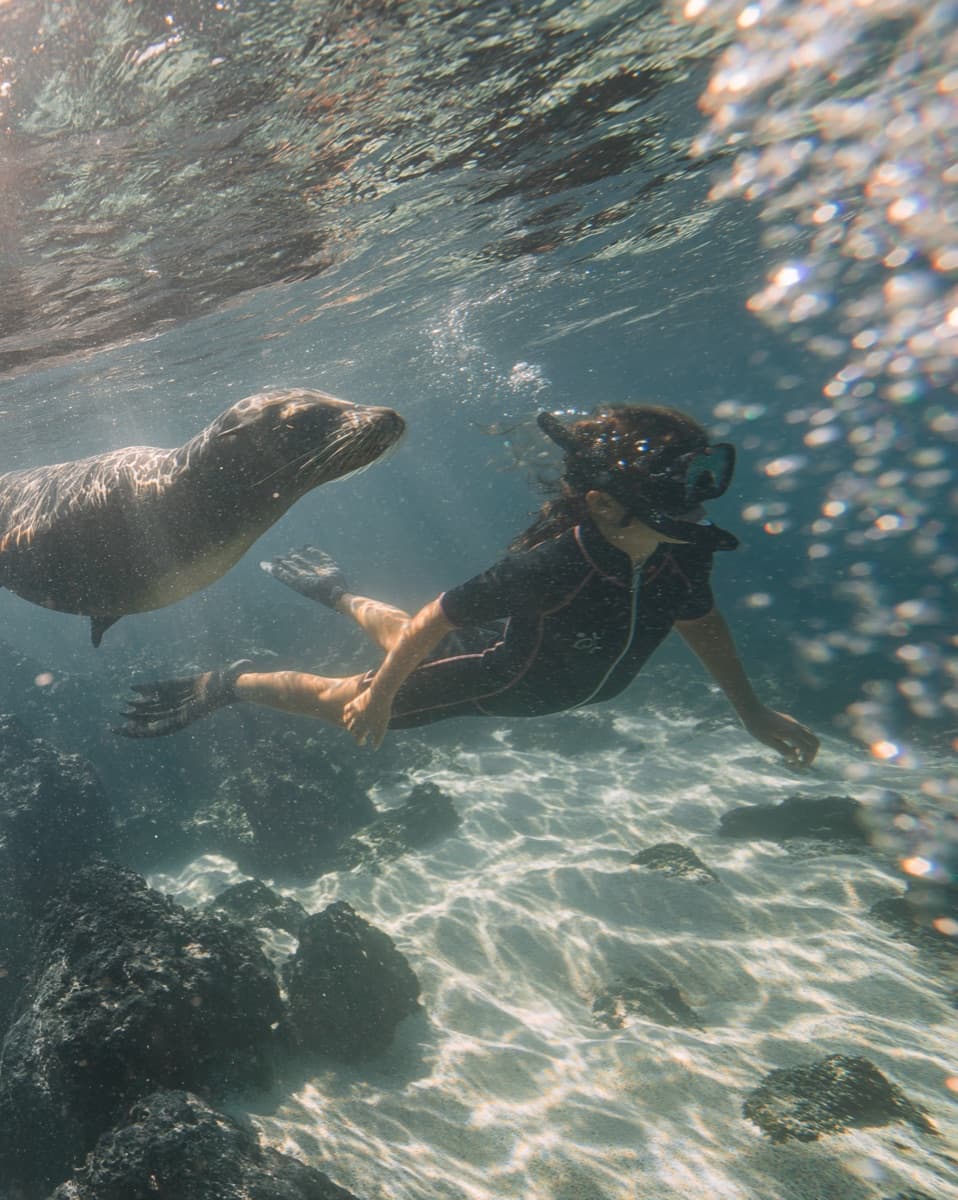
Yes, but the age cutoffs matter more than the brochures admit. Most expedition operators set a minimum age of 6 or 7. A meaningful minority set it at 12. Children under 6 generally require a written waiver from the operator and a signed acknowledgement that panga transfers, wet landings, and snorkelling are not designed around them. Operators that publish a lower minimum sometimes hold a separate, quieter policy at the ship level.
The honest caveat: a Galapagos cruise with a child under 6 is not the better trip. The pace is structured around two long landings a day with sustained walking on uneven volcanic basalt, snorkelling in 18–22°C water, panga transfers in chop, and a six-or-seven-hour cruising day for adults to sit through. Land-based wins outright in this band: Tortuga Bay, the highland tortoise reserves, the malecón sea lions in Puerto Baquerizo Moreno, and the option to skip a day. The full version of that argument is here: Galapagos Cruise vs. Land-Based.
Where cruises do work for families is the 8–12 age band, and the relevant filter is interconnecting cabins. Sea Star Journey, Endemic, Treasure of Galapagos, and Tip Top II hold cabin layouts that connect through internal doors, which solves the parents-in-one-cabin-children-in-another constraint without two booking-form purchases at supplement rates. NG Endeavour II and Santa Cruz II run dedicated young-explorer programmes on family-week departures, with adjusted snorkelling and naturalist content for under-12s. Above 12, children fold into the standard programme.
If you layer the constraints
Most readers don’t fit one constraint cleanly. The useful question isn’t “small or large?” but “which ship matches all four of my constraints at once?” Four common combinations and the ships that actually fit them:
| Reader profile | Likely fit |
|---|---|
| Seasick-prone, solo, budget-conscious | A larger monohull with a single cabin: NG Endeavour II (9 dedicated singles), Santa Cruz II’s Voyager deck (singles at +15% rather than the 50–100% supplement), or Solaris (5 dedicated singles, smaller ship and a cheaper price band) |
| Family with under-12s | A mid-size ship with interconnecting cabins: Sea Star Journey, Endemic, Treasure of Galapagos, or Tip Top II. NG Endeavour II for families wanting amenities and a young-explorer programme |
| Photographer | A small ship with first-pangas-out flexibility and an itinerary that includes Genovesa and Fernandina at golden hour. Samba and Treasure of Galapagos sit in this band; western-circuit expedition charters are the next step up |
| Diver | Naturalist cruises do not include scuba. Wolf and Darwin require a dedicated dive liveaboard: Aggressor III (16 berths, around $7,300 for 7 nights), Galapagos Sky, or one of the Master variants. Dive insurance is mandatory |
The pattern: once two constraints stack, the field of acceptable ships drops sharply. A solo traveller on a budget who is also seasick-prone has roughly five ships to consider, not seventy. Live availability across BCN’s fleet surfaces the bookable cabins on those specific ships without a quote request, which is the friction most agents add to this filter.
Who this guide is for
Take this seriously if:
- You’re a first-timer comparing catamaran versus monohull, small versus large, and not getting a useful answer from operator marketing
- You’re researching specific ships by name and want to know which constraints those ships were built around
- You’re a solo traveller, a family with children, a photographer, or a diver, and you’re filtering for a different shortlist than the default
Consider skipping a cruise entirely if:
- You’re travelling with children under 6 (land-based wins outright)
- Your activities budget is below roughly $2,000 per person
- Severe, unmanaged motion sickness rules out continuous sea time
- Mobility constraints rule out wet panga landings and uneven volcanic basalt
- You have fewer than five days on the ground
The full version of those exceptions: Galapagos Cruise vs. Land-Based.
Quick reference
The three things to keep
- Hull size beats hull shape. A 90–100 berth monohull rides smoother than a 16-berth catamaran in the same swell because pitch (not roll) is the discomfort on inter-island transits.
- The mid-band (40–48 passengers) is the under-quoted answer. Endemic, La Pinta, and Isabela II carry hotel-grade public spaces with enough mass to ride a swell — the spot most first-timers actually belong.
- Once two constraints stack, the field drops sharply. Solo-and-seasick-prone narrows to ~5 ships from ~70. Use BCN’s live availability to see the bookable cabins on those specific ships without an inquiry call.