What's Actually Included in a Galapagos Cruise (and What's Not)
A “starts at $2,499” Galapagos cruise lands closer to $5,000 to $7,500 per person all-in. The sticker hides $220 in mandatory government fees, $317 to $553 for the domestic flight, $175 to $280 in tips per couple per week, mandatory travel insurance, and a series of class-dependent extras the brochure does not itemise. This guide names every line.
The decision matrix
A note before the numbers: tier names are not standardised.“Tourist Superior,” “First Class,” and “Luxury” are marketing labels each operator applies to its own fleet. There is no Galapagos governing body that audits the labels and no agreed cabin-size or inclusion threshold behind any of them. Treat the tiers as a rough budget shorthand, not a guarantee.
Tourist Superior — roughly $715 to $930 per person per night all-in (about $5,000 to $6,500 for a 7-night trip). Cabin, all meals, naturalist guide, and panga transfers are inside the fare. Alcohol, wetsuit, and tips are extra.
First Class — roughly $870 to $1,085 per person per night all-in (about $6,100 to $7,600 for a 7-night trip). Better cabin geometry, better food, sometimes a wetsuit thrown in. Alcohol is still extra at most operators. Tips are extra.
Luxury / Ultra-luxury — roughly $1,070 to $2,140+ per person per night all-in (about $7,500 to $15,000+ for a 7-night trip). At this end most extras are pre-bundled into the fare: alcohol, wetsuit rental, and gratuities.
Every band above is the cruise fare plus $220 in mandatory government fees, the domestic flight, and tier-appropriate tips. The sections below expand each line.
What’s included in the sticker price
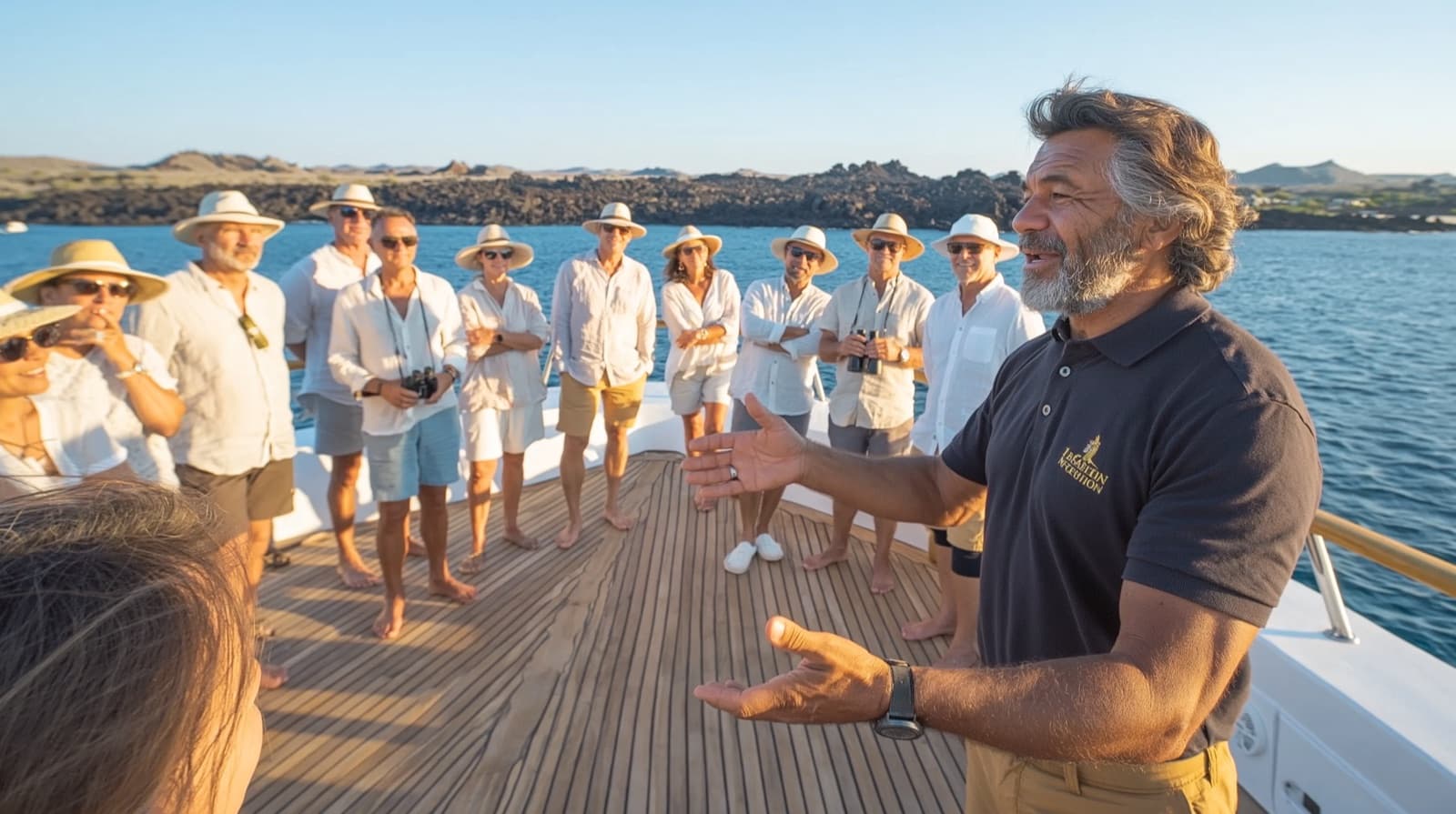
Regardless of tier, every authorised expedition cruise carries a fixed core. The Galapagos National Park rule is a guide-to-passenger ratio of 1:16, which fixes the naturalist team headcount for every itinerary in the fleet. From there: all meals on board, panga transfers between the ship and each landing site, two visitor sites per day under the park-approved itinerary, and your cabin for the duration. Snorkelling gear (mask, snorkel, fins) is included on every operator we track. Drinking water and non-alcoholic drinks at meals are included almost everywhere; the few exceptions name themselves in the booking confirmation.
The honest caveat: “all meals” does not mean the same thing on every ship. A 16-berth catamaran serves three plated courses with a single dinner option from a small galley; an 80- to 100-berth expedition ship runs a buffet with a cooked-to-order line and several entree choices. The food is good across the fleet. The variety is not. If buffet variety matters, that is a tier-three filter, not a tier-one one.
The cleanest first-class operators carry naturalist guide, all meals, snorkelling gear, panga transfers, kayaks, paddleboards, wetsuits, and complimentary wine and beer at lunch and dinner inside the fare. Most first-class operators match three or four of those. Few match all of them. Reading two booking confirmations side by side is the fastest way to find the inclusion gap.
What’s never included (and why)
The floor under every Galapagos cruise
| Park entrance fee (cash USD on arrival) | $200 |
|---|---|
| INGALA Transit Control Card | $20 |
| Domestic flight to Baltra or San Cristóbal (RT) | $317–$553 |
| Tips (mid-market, half of $175–$280 per couple) | $88–$140 |
| Travel insurance (10-day policy) | $80–$200 |
| Floor on top of the cruise fare | $705–$1,113 |
The honest list of what every Galapagos cruise leaves off the sticker, regardless of tier or operator.
Most of these aren’t cruise-specific costs — they’re the cost of visiting Galapagos at all. The park entrance fee, the INGALA card, the domestic flight, and travel insurance apply to every visitor whether they cruise, island-hop, or stay at a single hotel. Only the gratuities and the wetsuit/alcohol upcharges are specific to taking a cruise. If you are comparing a cruise to a land-based trip, strip the floor out of both quotes before you compare.
One exception worth flagging:a small number of operators bundle the round-trip domestic flight into the fare and time it against the cruise schedule — you arrive in the islands on departure day and fly back on disembarkation day on the operator’s charter or block. When that’s the case, the flight line below collapses into the cruise fare and the floor drops accordingly. The booking confirmation will name it explicitly; if it doesn’t, assume the flight is on you.
The Galapagos National Park entrance fee: $200 per foreign adult, cash USD, paid on arrival at Baltra (GPS) or San Cristóbal (SCY). No card payment. No online pre-payment. This fee doubled from $100 on 1 August 2024 (the first increase in 26 years), and 2024 park-fee revenue rose 23.4 percent year-on-year to $22.1 million. Sources still quoting $100 are pre-August-2024 and stale. Bring crisp bills; the airport change counter is inconsistent and the queue is long.
The INGALA Transit Control Card: $20 per person, all ages, all nationalities. Online registration has been available since 29 May 2025; complete it within 48 hours of your domestic flight. The Quito and Guayaquil airport counters still operate as a backup if the online system is down.
Domestic flights to Baltra or San Cristóbal: $317 to $553 round-trip. Avianca and LATAM are the only carriers; Equair ceased operations mid-2023, and the field has been a duopoly since. Operator-block fares on Sunday cruise-group blocks sit at $445 to $553 round-trip; independent dates booked through Expedia or momondo can find $275 to $450 in the low season. Christmas, Easter, and July to August push past $600. Resident fares of $150 to $250 are enforced at the gate via Ecuadorian ID; foreigners booking a resident fare are charged the difference at check-in.
Gratuities: $175 to $280 per couple per week in the Tourist Superior and First Class bands ( $25 to $35 per guest per day), and $35 to $50 per guest per day in the unbundled Luxury band. Tips are paid in cash, in USD, on the last night, and divided between the naturalist guide and the crew on each operator’s stated split. A handful of ultra-luxury operators pre-bundle gratuities into the fare. Everywhere else, expect to settle in cash.
Mandatory travel insurance. The Galapagos National Park requires proof of medical and evacuation coverage from every visitor, enforced since 2024. Most cruise contracts now make insurance a condition of boarding. Budget $80 to $200 per person for a 10-day policy with adequate evacuation cover; dive liveaboards require dedicated dive insurance on top.
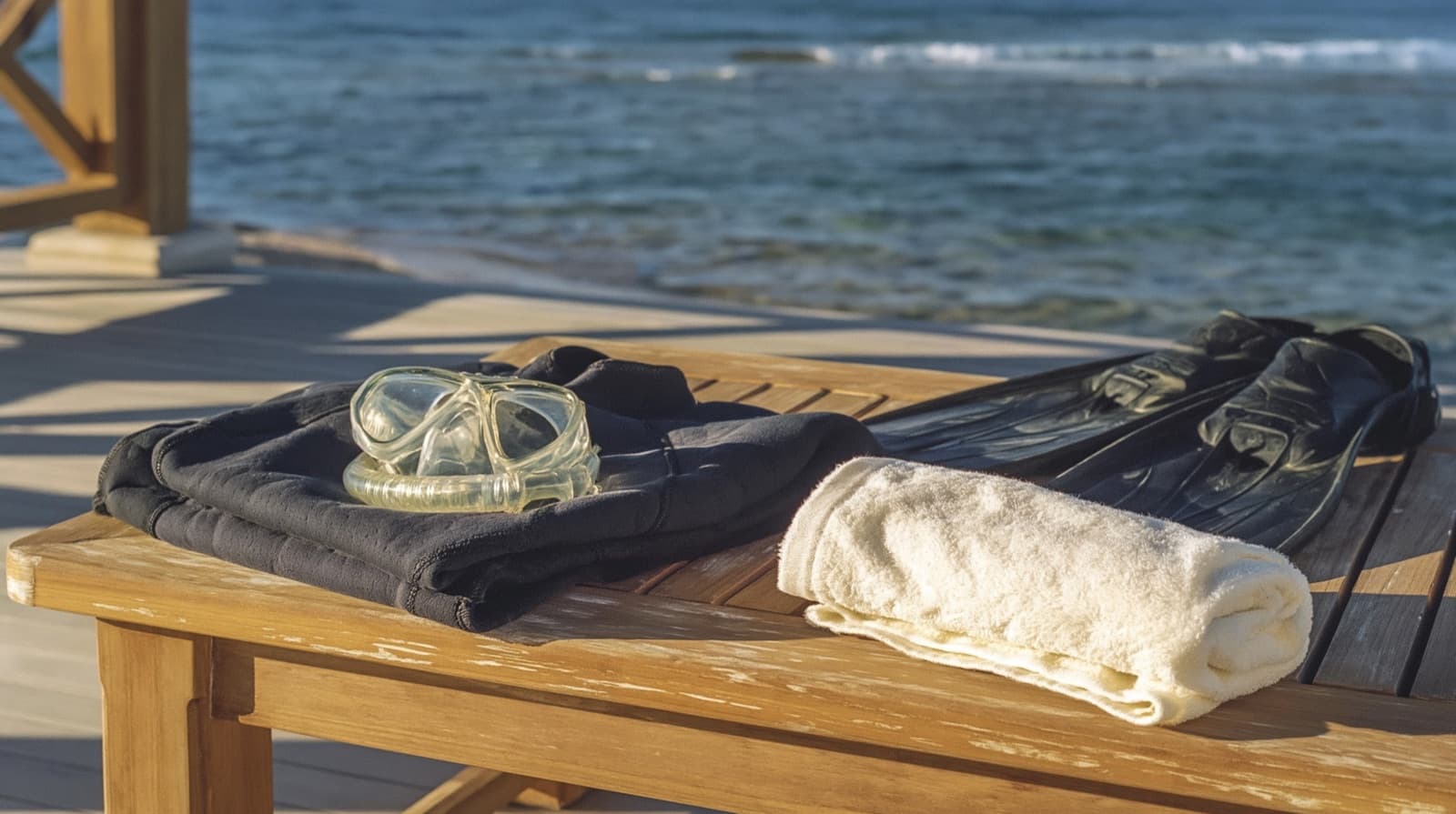
Alcohol below the Luxury tier. Most First Class operators include a glass of wine or beer at meals; cocktails, premium spirits, and bar service are charged at $6 to $14 per drink. Wetsuit rental is roughly $50 per week and not always included below the Luxury tier; the water sits at 18 to 22 degrees C and a 3mm shorty is the practical minimum for snorkelling sessions over 30 minutes. The Isabela port fee of $10 applies if your itinerary visits Puerto Villamil, paid in cash on arrival at the dock.
The pattern: every line above is unavoidable for the traveller who has already booked the cruise, and none of it appears in the headline number.
First Class vs. Tourist Superior: what actually changes
One reminder before the comparison:“First Class” and “Tourist Superior” are operator-set marketing labels, not standardised ratings. Two ships at the same advertised tier can carry meaningfully different cabins, food, and inclusions. The bands below describe the typical pattern, not a guarantee on any individual ship.
The class jump is the most underexplained part of the cruise market, and the most misunderstood. The realistic price delta is $1,000 to $2,500 per person on a 7-night itinerary. What the extra money buys, in order:
Cabin geometry. First Class cabins are 50 to 80 percent larger, sit on the upper decks, and almost always include private balconies on the newer upper-tier ships. Tourist Superior cabins are smaller, more often interior or low-deck, and the bathroom is a wet room rather than a separated shower stall.
Food and inclusion variety. First Class brings table service, more substantive wine lists, and a wider standing inclusion of snorkelling extras like wetsuits and kayaks. Tourist Superior brings respectable plated meals and the same wildlife schedule.
Crew-to-passenger ratio. Often slightly better at First Class, though not as dramatically as the brochures imply.
The honest caveat: “Luxury” sometimes buys furniture, not experience. The wildlife is identical across every tier. A waved albatross on Española does not nest more closely for a luxury-suite guest than it does for a tourist-superior guest. Premium cabins and bundled gin and tonics are real value for some travellers; for others the same dollars are better spent on a longer itinerary or a second trip.
By price band: the Tourist Superior to lower First Class range runs about $4,300 to $5,500 per week; the upper First Class band runs $5,500 to $6,800; the largest expedition ships sit at the upper end of First Class with the largest-ship trade-off built in; the Luxury and ultra-luxury band sits at $10,000 to $18,000+ and is where most extras stop being line items. Picking the cleanest ship at the tier you can absorb is a more reliable route than chasing a discount on a more expensive one.
Side by side: what you actually pay
The high-leverage table. Run a quote against this and a missing tick is a hidden cost the sticker did not name.
| Line item | Tourist Superior | First Class | Luxury / ultra-luxury |
|---|---|---|---|
| Naturalist guide (1:16 ratio) | Included. Included | Included. Included | Included. Included |
| Cabin and meals | Included. Included | Included. Included | Included. Included |
| Snorkelling gear (mask, fins, snorkel) | Included. Included | Included. Included | Included. Included |
| Panga transfers | Included. Included | Included. Included | Included. Included |
| Wetsuit rental (~$50/wk) | Extra fee. Extra | Sometimes included. Often included | Included. Included |
| Wine or beer at meals | Sometimes included. Sometimes | Sometimes included. Usually included | Included. Included |
| Cocktails and premium spirits | Extra fee. Extra ($6–$14/drink) | Extra fee. Extra ($6–$14/drink) | Included. Included |
| Kayaks / paddleboards | Sometimes included. Sometimes | Sometimes included. Often included | Included. Included |
| Gratuities ($25–$50/guest/day) | Extra fee. Extra ($175–$245/cpl/wk) | Extra fee. Extra ($175–$280/cpl/wk) | Included. Pre-bundled |
| Galapagos park fee ($200 cash) | Extra fee. Extra | Extra fee. Extra | Extra fee. Extra |
| INGALA card ($20) | Extra fee. Extra | Extra fee. Extra | Extra fee. Extra |
| Isabela port fee ($10, if visited) | Extra fee. Extra | Extra fee. Extra | Extra fee. Extra |
| Domestic flights ($317–$553 RT) | Extra fee. Extra | Extra fee. Extra | Extra fee. Extra |
| Travel insurance ($80–$200) | Extra fee. Extra | Extra fee. Extra | Extra fee. Extra |
A sticker price that hides them is a sticker price doing PR for the operator, not arithmetic for the buyer.
The pattern inside the table: the bottom five rows never collapse into the fare regardless of tier. Government fees, flights, and insurance are the floor under every Galapagos cruise, and a sticker price that hides them is a sticker price doing PR for the operator, not arithmetic for the buyer.
The BCN moat sits exactly here: live availability across the fleet surfaces every operator’s current sticker against this matrix without an inquiry call. The ships with the smallest gap between sticker and all-in are the ones to favour, and the gap is visible before the first email.
Who this is for
Take this seriously if:
- You’re comparing two cruise quotes and trying to figure out which is actually cheaper all-in
- You were blindsided by the $200 park fee at the airport on a previous trip and want to model the next one accurately
- You’re deciding between Tourist Superior and First Class and want to know what the $1,000 to $2,500 delta per person actually buys
- You’re an operator wanting to understand how BCN frames pricing in the editorial layer
You can skip the deep dive if:
- You’re booking in the ultra-luxury band, where most extras are pre-bundled and the all-in number is closer to the sticker
- You only need the single-number summary; the per-day pricing tiers and totals are in the Galapagos cruise cost guide
Quick reference
The three things to keep
- Add roughly $705–$1,113 per person to the cruise fare for the floor: park fee $200, INGALA $20, RT domestic flight $317–$553, tips, and travel insurance.
- The class jump (Tourist Superior → First Class) is $1,000–$2,500 per person, and what it buys, in order, is cabin geometry, food and inclusion variety, and a slightly better crew ratio. The wildlife is identical at every tier.
- A handful of ultra-luxury operators pre-bundle gratuities and most extras into the fare. Everywhere else, expect to settle alcohol, wetsuit rental, and tips on the last night in cash.