Galapagos Cruise vs. Land-Based: An Honest Comparison
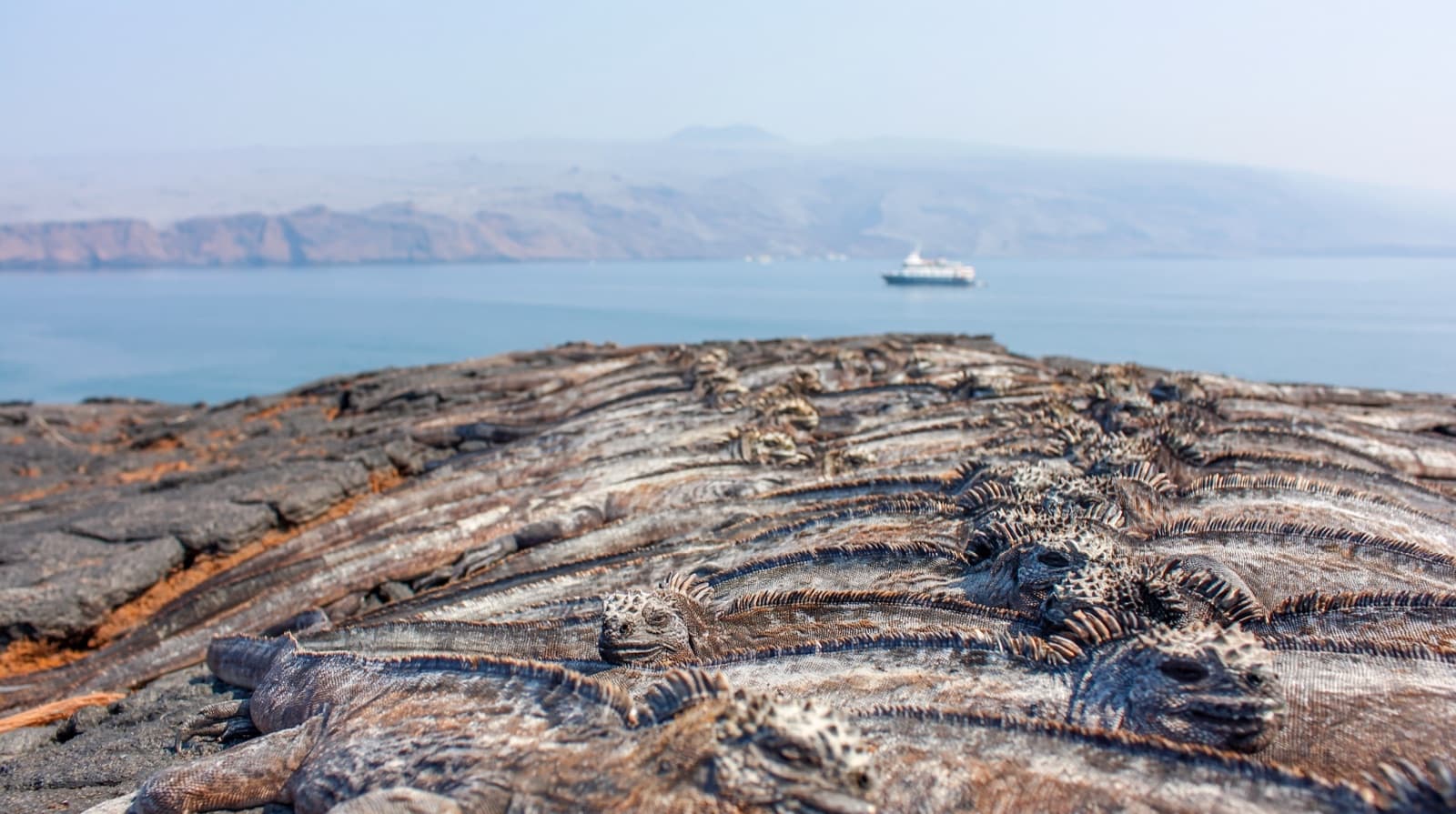
The Galapagos is structured around cruises. Park rules cap the expedition fleet at ~70 vessels and roughly 2,200 berths; land-based tourism is uncapped, and all visitor growth since the early 2000s has happened on land. Most cruise-only sites — Fernandina, Genovesa, the western Isabela coast, Española’s albatross colony — aren’t reachable from any town. If you can absorb the cost and you have at least five days, a cruise is the format the destination was built around. For most first-time visitors, it’s the better trip.
Land-based is a real Galapagos trip too, and there are honest exceptions where it wins outright — children too young for any ship that takes minors, budgets that won’t stretch, fewer than five days in the archipelago, mobility constraints, or untreatable severe motion sickness. Everything else points to the cruise.
The decision matrix
| If… | You should probably… |
|---|---|
| You want the remote-site species (Fernandina, Genovesa red-foots, Española’s albatross Apr–Dec) and you have 5+ days | Take a cruise |
| You’re a photographer, naturalist, or first-timer who wants the most archipelago per day | Take a cruise |
| You’re travelling with children and willing to book a family-friendly ship | Take a cruise |
| Children too young for any ship that takes minors | Stay land-based |
| Activities budget is below ~$2,000 per person | Stay land-based |
| You have fewer than five days on the ground | Stay land-based |
| Mobility constraints rule out panga transfers and volcanic basalt | Stay land-based |
| You want both remote-site access and town flexibility, and you have 10+ days | Hybrid (4–5 night cruise + 3 land nights) |
Five days is the floor because it matches the most common itinerary: fly in the day the cruise starts, fly out the day it ends. Several vessels actively cater to younger children with shorter walks, dedicated naturalist programming, and family-cabin configurations — BCN’s filters surface family-friendly departures, and you can message the operator directly to confirm minimum-age policies before you commit.
What you only get from a cruise
Cruise-only species and sites
A handful of species are genuinely cruise-only.
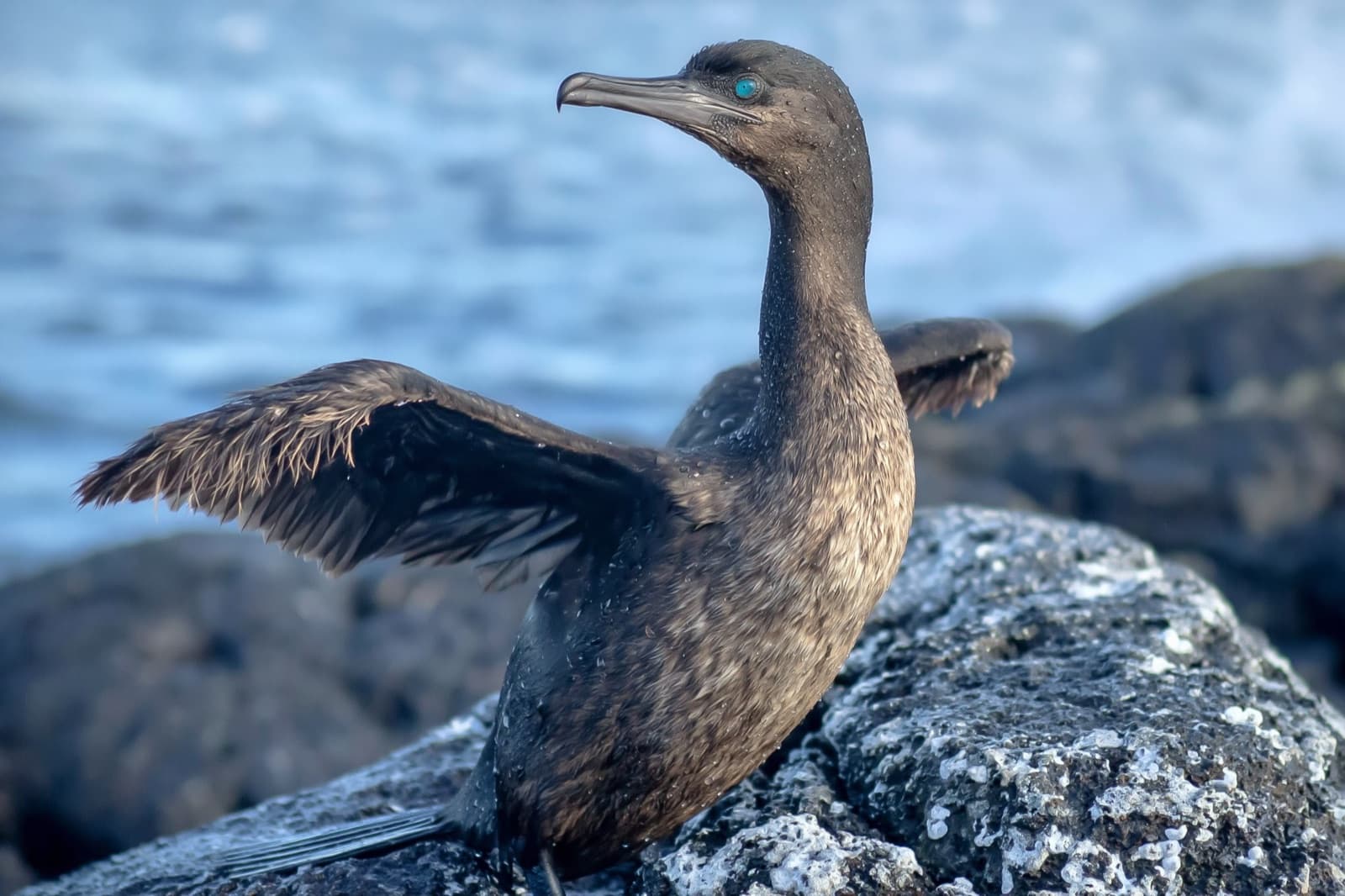
Flightless cormorant
Phalacrocorax harrisi · Fernandina · western & northern Isabela
The only flightless cormorant on Earth. GNP 2022 census: 2,085 birds, up from ~900 in 2009. No land-based access — panga landings only.
Waved albatross
Phoebastria irrorata · Punta Suárez, Española
The only albatross that breeds in the tropics. ~35,000 birds nest April through December; at sea Jan–Mar.
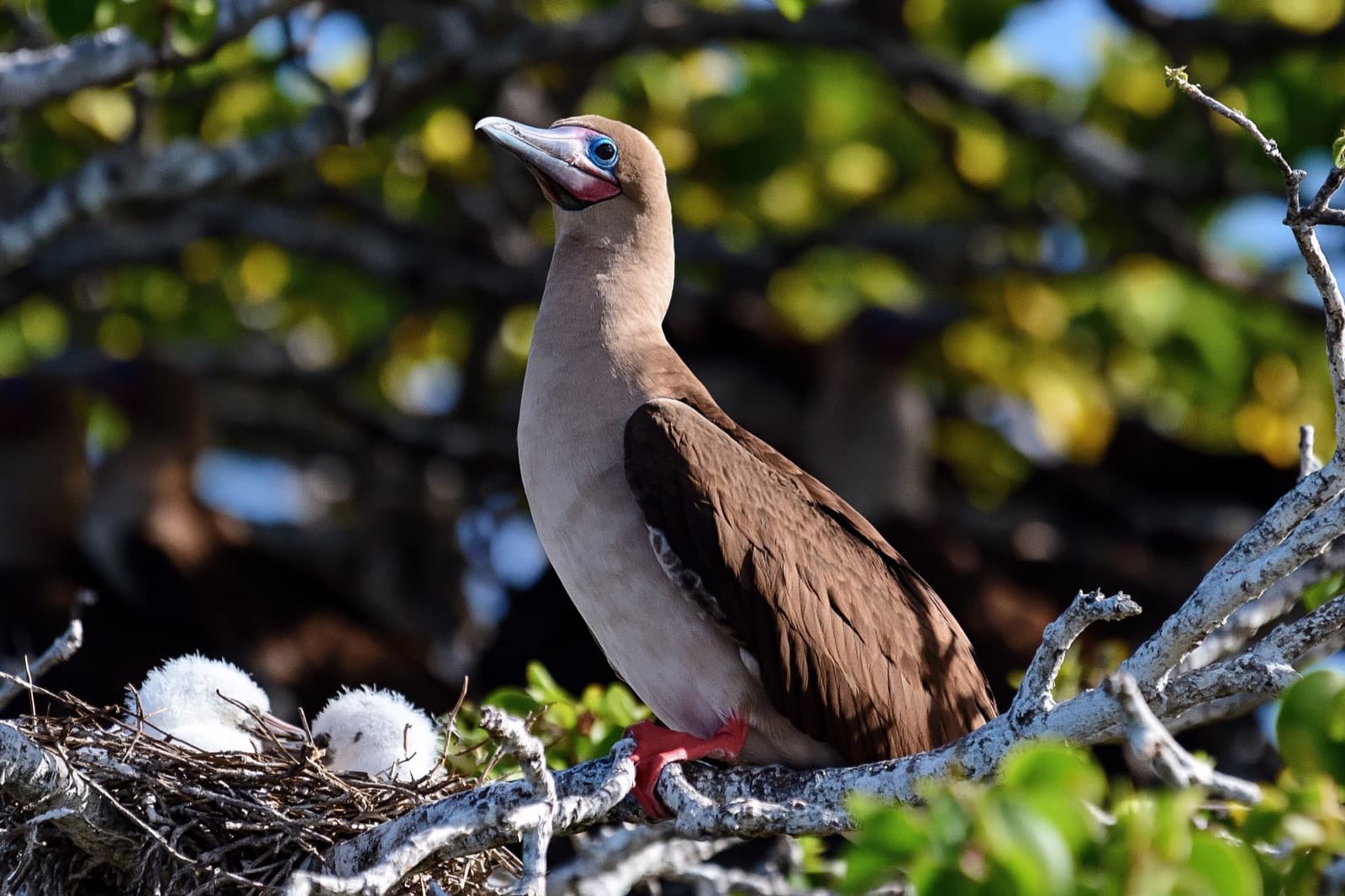
Red-footed boobies (in numbers)
Sula sula · Genovesa
The only booby that nests in trees. ~200,000 pairs — the largest colony anywhere. A six-hour-plus sail from any port.
Galapagos fur seal (in numbers)
Arctocephalus galapagoensis · Santiago, Genovesa, Marchena, northern Isabela
The smallest eared seal in the world, and the only one that hunts at night. Day trips might find one or two; cruises put you in a colony.
Fernandina marine iguana
Amblyrhynchus cristatus cristatus · Fernandina
The only major island never colonised by an introduced species. The largest marine iguanas on Earth, up to 1.7 m, with the most elaborate dorsal spines.
Flightless cormorant (Phalacrocorax harrisi) — the only flightless cormorant on Earth, with stunted wings a third the size needed for flight: a recent (~2-million-year) evolutionary trade of flying for diving power. Found on Fernandina and the western and northern coast of Isabela. The Galapagos National Park’s 2022 census put the population at 2,085 birds, up from roughly 900 in 2009. There is no land-based access. Punta Espinoza, Tagus Cove, Punta Moreno: panga landings from a vessel, full stop.
Waved albatross (Phoebastria irrorata) — the only albatross that breeds in the tropics, with an 8-foot wingspan and an elaborate courtship dance of bill-clacking, head-bobbing, and bowing that lifelong-paired mates renew every year. Punta Suárez, Española. The entire breeding population of about 35,000 birds nests here April through December. Long day-trips from San Cristóbal exist but are weather-dependent and rare; in practice this is cruise-only, and the birds are at sea January through March regardless.
Red-footed boobies in numbers — the only booby that nests in trees instead of on the ground, with cartoon-bright red feet you only see up close. Genovesa hosts roughly 200,000 pairs, the largest colony anywhere. The island sits a six-hour-plus sail from the nearest port; you cannot day-trip to it. A smaller, land-accessible colony exists at Punta Pitt on San Cristóbal — useful, but not the same thing.
Galapagos fur seal in numbers (Arctocephalus galapagoensis) — the smallest eared seal in the world, and the only one that hunts at night, surfacing squid and lanternfish other seals can’t reach. Found on Santiago, Genovesa, Marchena, and northern Isabela. Day trips might find one or two; cruises put you in a colony.
Fernandina itself — the only major island in the archipelago that has never had an introduced species. The marine iguanas there (Amblyrhynchus cristatus cristatus) are the largest on Earth, reaching up to 1.7 metres, with the most elaborate dorsal spines of any subspecies — and they congregate in densities that exist nowhere else.
For divers, Wolf and Darwin (the hammerhead schools and whale shark aggregations) are dive-liveaboard-only.
The 24-hour day
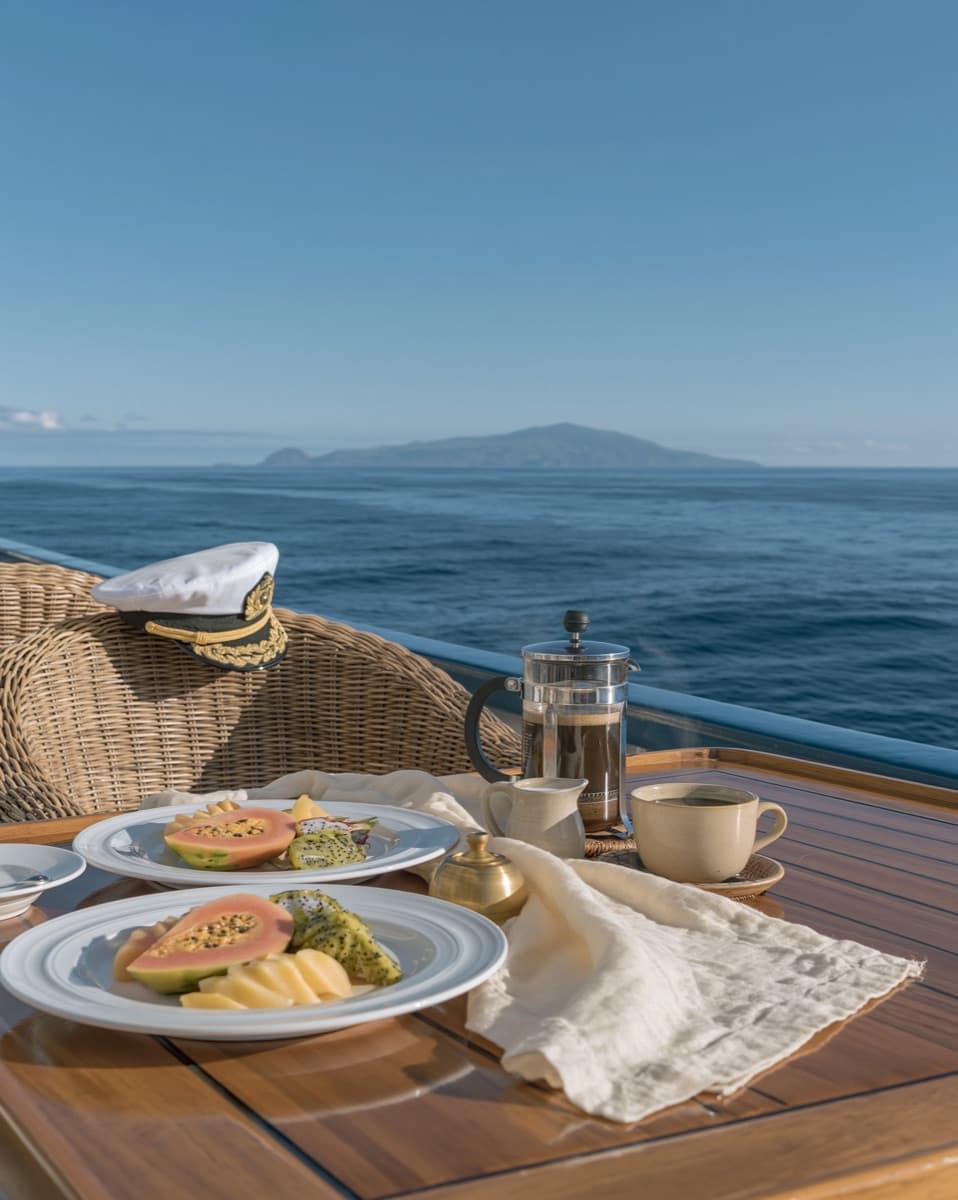
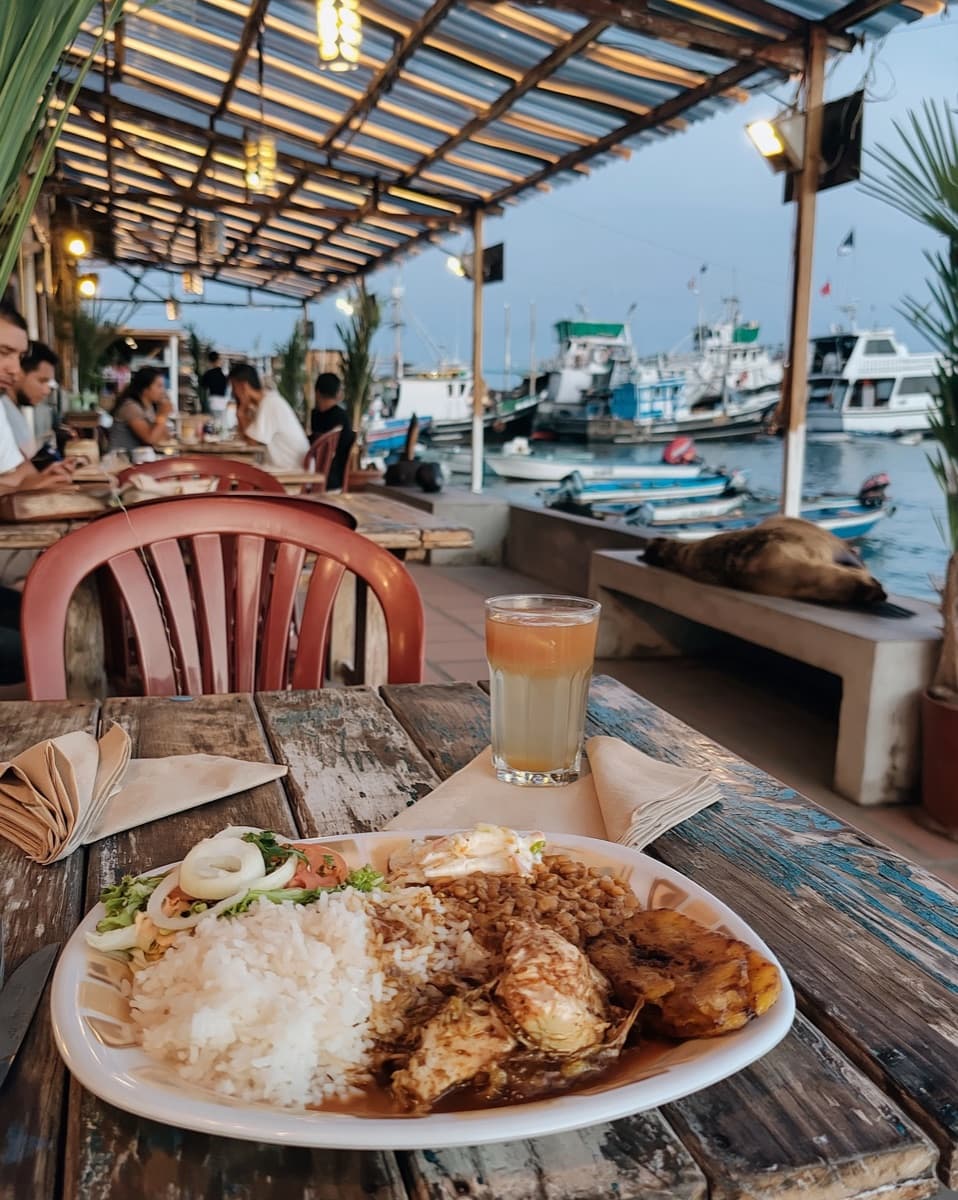
This is the underrated argument. The ship moves while you sleep. Circumnavigation happens at night. You wake up already at the next site.
That changes what’s available to you. The first activity of the day can start at sunrise, in the water, at a site nobody else has reached yet — snorkelling with mantas off the north tip of Isabela at 6:30 AM, watching boobies plunge-dive in pre-breakfast light, kayaking a glass-flat bay before the wind comes up. The last activity can run into late dusk. None of this is reachable from a town. Day boats from Puerto Villamil or Puerto Ayora aren’t loading until 7 or 8 AM and are returning by mid-afternoon. By the time they reach a remote site, you’re already on the second snorkel of the day.
A land-based week is a series of commutes. A cruise week is a series of arrivals.
The guide, and the people
The single biggest variable on a Galapagos trip is the naturalist guide, and the cruise format is what lets that variable matter.
A national park naturalist on a small ship is with the same 16 to 100 passengers for the entire week. They notice who’s a birder, who’s a geologist, who’s nine years old and wants to know what an iguana eats. By day three they’re tailoring landings around what the group is interested in. They eat dinner with you. You ask them about Lonesome George over coffee at the railing. The relationship compounds across the week, and most travellers who’ve done both say the guide is the single biggest reason a cruise is worth more than a land-based week — even before the species list. Day-trip guides on land-based itineraries are excellent, but you get them for six hours and a different group every day. Closer to a museum tour than a teacher.
The other passengers matter too. People who book a Galapagos cruise have self-selected: curious, often well-travelled, willing to spend real money on a wildlife trip. Dinner-table conversation skews toward the things you came here for. Many travellers come back from the Galapagos with a marine iguana photo and three new friends.
Continuous time at sea
Most travellers spend a day or two before they start actuallyseeing — before they notice the angle a marine iguana holds its head before it sneezes salt, or the way a sea lion yawns before it barks. Continuous time at sea, away from settlements and street lights, shortens that adjustment. Equatorial sunsets across open Pacific. Both hemispheres’ constellations on the same moonless night. Bioluminescent plankton in the ship’s wake.
What land-based travellers still see
Giant tortoises in the highlands, marine iguanas on every inhabited island, sea lions, blue-footed boobies, penguins at Las Tintoreras and Bartolomé, hammerheads at Gordon Rocks for advanced divers, and the smaller red-footed booby colony at Punta Pitt. The miss list is short — but the species above are the ones the archipelago is structurally famous for.
The honest exceptions
Five reasons to go land-based instead.
Cost
Land-based is cheaper, often by a wide margin. Compare apples to apples by including the fees that “starts at $2,499” never includes: the $200 Galapagos National Park entrance fee (cash USD, on arrival, doubled from $100 on 1 August 2024), the $20 INGALA Transit Control Card, the $317–$553 round-trip domestic flight from Quito or Guayaquil, $175–$280 in tips per couple per week, and mandatory travel insurance since 2024.
Realistic 7-day totals, per person, double occupancy, excluding international flights:
| Scenario | Total |
|---|---|
| Budget land-based (hostel, two day tours) | $1,510–$1,690 |
| Mid-range land-based (3-star hotel, four day tours, one dive day) | $3,225–$3,500 |
| Mid-range 7-night cruise (first class) | $5,395–$6,595 |
| Luxury 7-night cruise | $8,245–$15,165 |
| 7-night dive liveaboard (Wolf & Darwin) | $8,540–$8,765 |
Two things change the picture.
A 5-day cruise narrows the gap. A Tourist-Superior 5-day cruise (~$2,800) plus the $670 of fixed costs lands near $3,470 — within striking distance of a mid-range land-based week, with the upside of one or two cruise-only sites. Five-day cruises are also the most popular length.
Last-minute deals close it dramatically.Open cabins inside 90 days run anywhere from 25% off list to as much as 75% off — operators discount aggressively to fill cabins rather than sail with empty ones. The trade-off is choice: book six to twelve months out and you pick the exact vessel, cabin, and itinerary; book inside 90 days and you take whichever discounted cabins are still open. BCN’s live availability shows both. Browse open departures.
Solo travellers face the opposite problem: single supplements run 50–100% on most ships, while land-based has none. A handful of ships hold dedicated single cabins or charge a smaller premium; BCN flags them in search, so you can message the operator directly rather than guess at the supplement.
Children too young for any ship
Several vessels are explicitly family-friendly. If your child is too young for any of them, land-based is the answer.
Fewer than five days
A “5-day” cruise is fewer than three full sailing days. Below that floor, the math doesn’t work — you’ll spend more time getting to the Galapagos than in it.
Mobility constraints
Panga transfers, wet landings, and uneven volcanic basalt aren’t optional on a cruise. Land-based itineraries built around hotel transfers and town walks are easier on travellers who can’t manage the wet-landing format.
Severe motion sickness, properly managed
About 92% of cruise passengers barely notice the motion. Of the remainder, almost everyone manages with medication — yours from home (non-prescription pills clear Ecuadorian customs without issue) or the ship’s onboard supply, which the medic dispenses on request. Worth knowing: the roughest boat on a Galapagos trip is usually not the cruise. It’s the inter-island lancha — a two-hour open speedboat with no stabilisation. Land-based travellers ride more of those, not fewer. If true severe vestibular issues rule out medication-managed sea time, land-based with inter-island flights is the answer. For everyone else, this is a smaller decision factor than online forums make it sound.
The hybrid: when you can’t commit to a full cruise
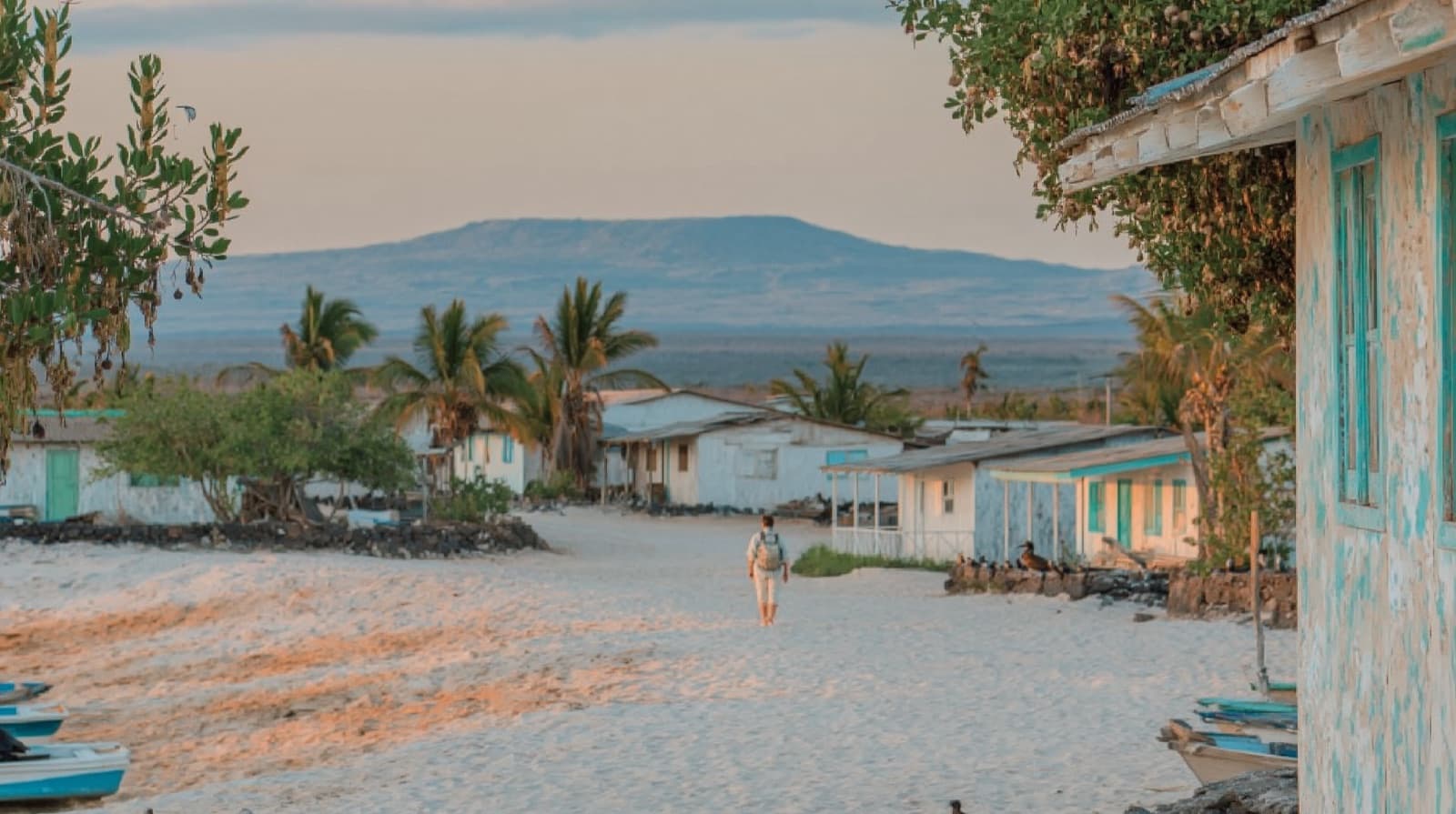
For travellers stuck between the cost of a full cruise week and the limits of a land-only trip, a short cruise plus a land extension is the cleanest middle path. A growing number of operators sell these as a single building block, often discounting the land portion when booked together. The catch is that most agents only assemble hybrids on inquiry, around fixed cruise dates, and a week of back-and-forth later you find the segment you wanted is gone. BCN lists the bookable short-cruise segments alongside live availability, so you can build a hybrid yourself in an afternoon — and reach the operator directly when you’ve narrowed it down.
Two combinations work well for first-time visitors:
- Southeast cruise (Española–Floreana–Santa Fé–South Plaza–Santa Cruz, 4 days) + 3 nights on Isabela town. Waved albatross via Española, plus Sierra Negra volcano, Los Túneles (blue-footed boobies, seahorses, penguins), and the Las Tintoreras penguin snorkel. Best for birders, volcano enthusiasts, and divers wanting a day-dive add-on.
- North/Central cruise (Bartolomé–Genovesa–Santiago–North Seymour, 4 days) + 3 nights on Santa Cruz. Genovesa red-foots plus Tortuga Bay, the Charles Darwin Research Station, the highland tortoise reserves, and the Puerto Ayora town day. Best for families and first-timers wanting iconic sites.
Approximate cost: $3,700–$4,200 per person — between a full land-based week and a full cruise week, but reaches remote sites no land-only week can.
Who each option suits
Take a cruise if:
- You want the cruise-only species and sites: Fernandina, Genovesa, Española’s albatross, western Isabela
- You want sunrise activities at remote sites and the most archipelago per day
- You want a week-long relationship with a national park naturalist and a self-selected, like-minded group
- You’re a diver willing to commit to a Wolf and Darwin liveaboard
- You’re willing to spend $3,470 on a 5-day option, $5,395–$6,595 on a mid-range 7-night week, or watch for last-minute discounts up to 75% off
- You’re travelling with children and willing to book a family-friendly ship
Go land-based if:
- Your child is too young for any ship that takes minors
- Your activities budget is below ~$2,000 per person
- True severe vestibular issues rule out continuous sea time, even with medication
- Mobility constraints rule out panga transfers and uneven volcanic basalt
- You have fewer than five days on the ground
Do a hybrid if:
- You have 10+ days and want both remote-site access and town flexibility
- You want to add diving, surfing, or biking that cruise schedules can’t fit
For most first-time visitors who can absorb the cost, a cruise — or a hybrid — is what the destination was built around.
If you’ve decided which way to go, browse live availability across the fleet — book the right vessel six to twelve months out, or watch for last-minute discounts up to 75% off in the ninety days before departure. Either way, BCN connects you directly with the operator running the ship.
Quick reference
The three things to keep
- Cruise-only species and sites:Fernandina, Genovesa (~200,000 red-footed booby pairs), Española’s waved albatross (Apr–Dec), western Isabela, and Galapagos fur seal colonies.
- The 24-hour day: the cruise is what unlocks sunrise snorkels, dusk landings, and overnight repositioning. A land-based week is commutes; a cruise week is arrivals.
- The guide and the group:a week with the same naturalist and the same self-selected, curious passengers is half the value of a cruise. Day-trip guides can’t compound the way a cruise relationship does.