Loading departure…
Loading departure…
Loading departure…
Loading departure…
Loading departure…
Loading departure…
Loading departure…
Loading departure…
Loading departure…
Loading departure…
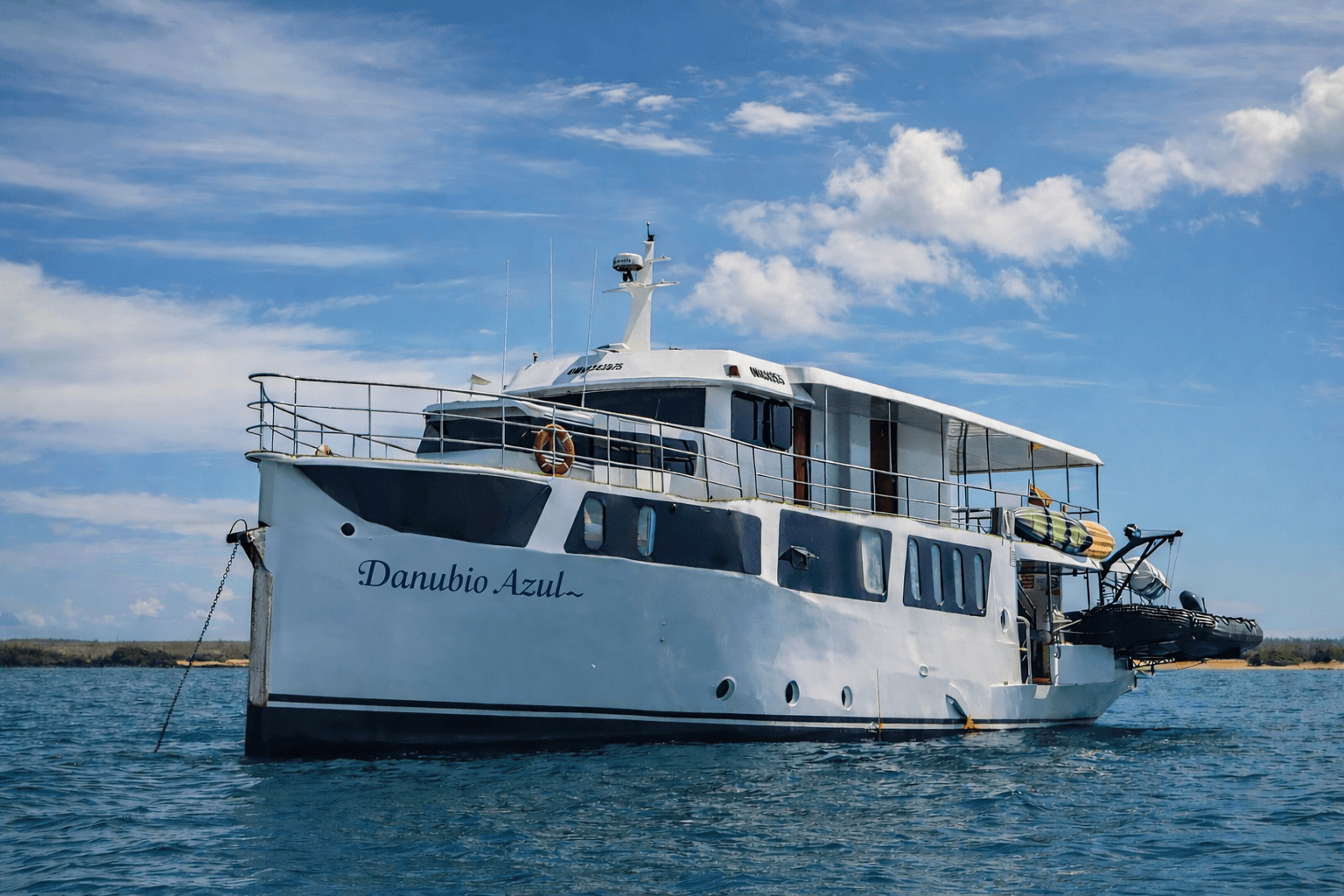
Public Areas
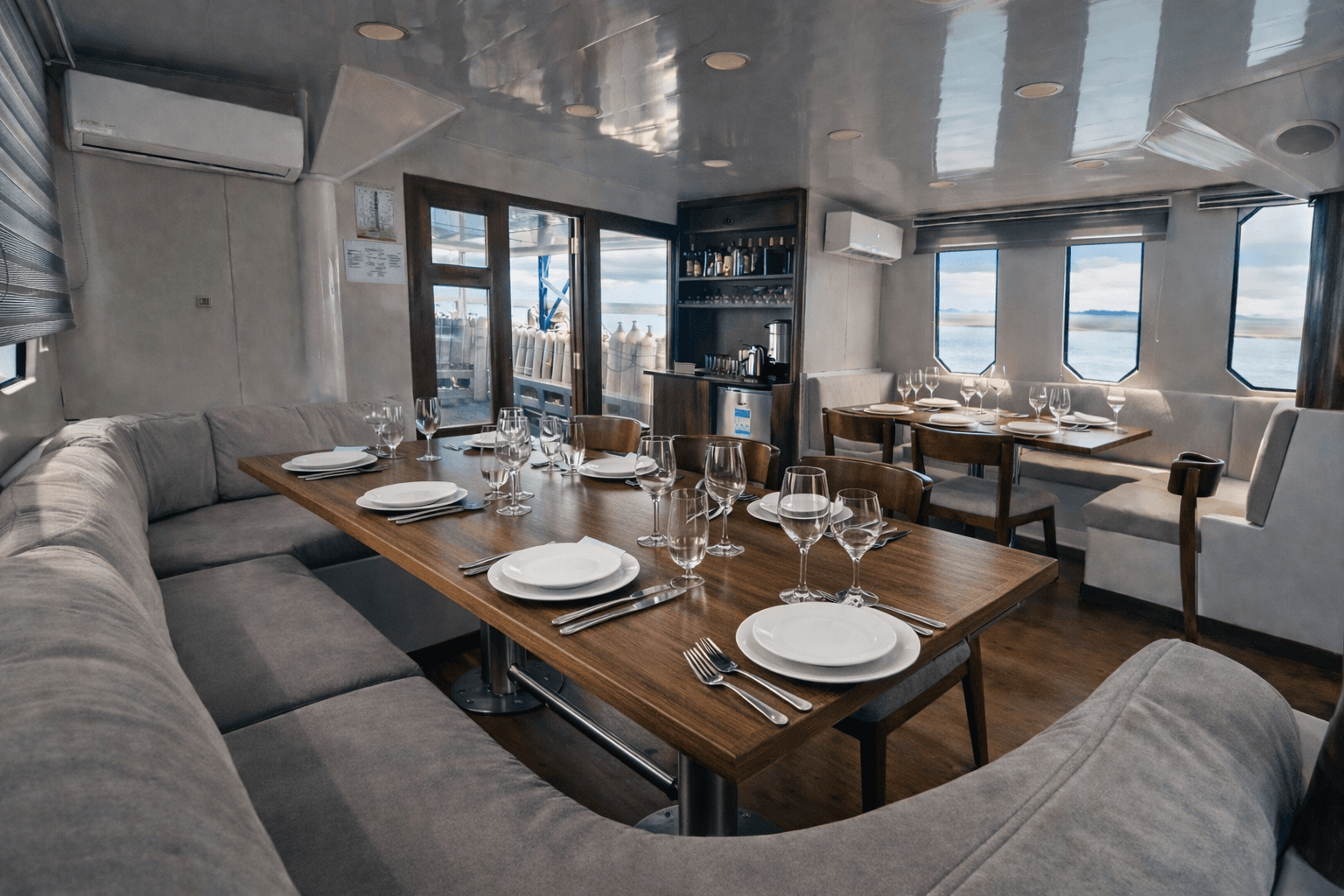
Public Areas
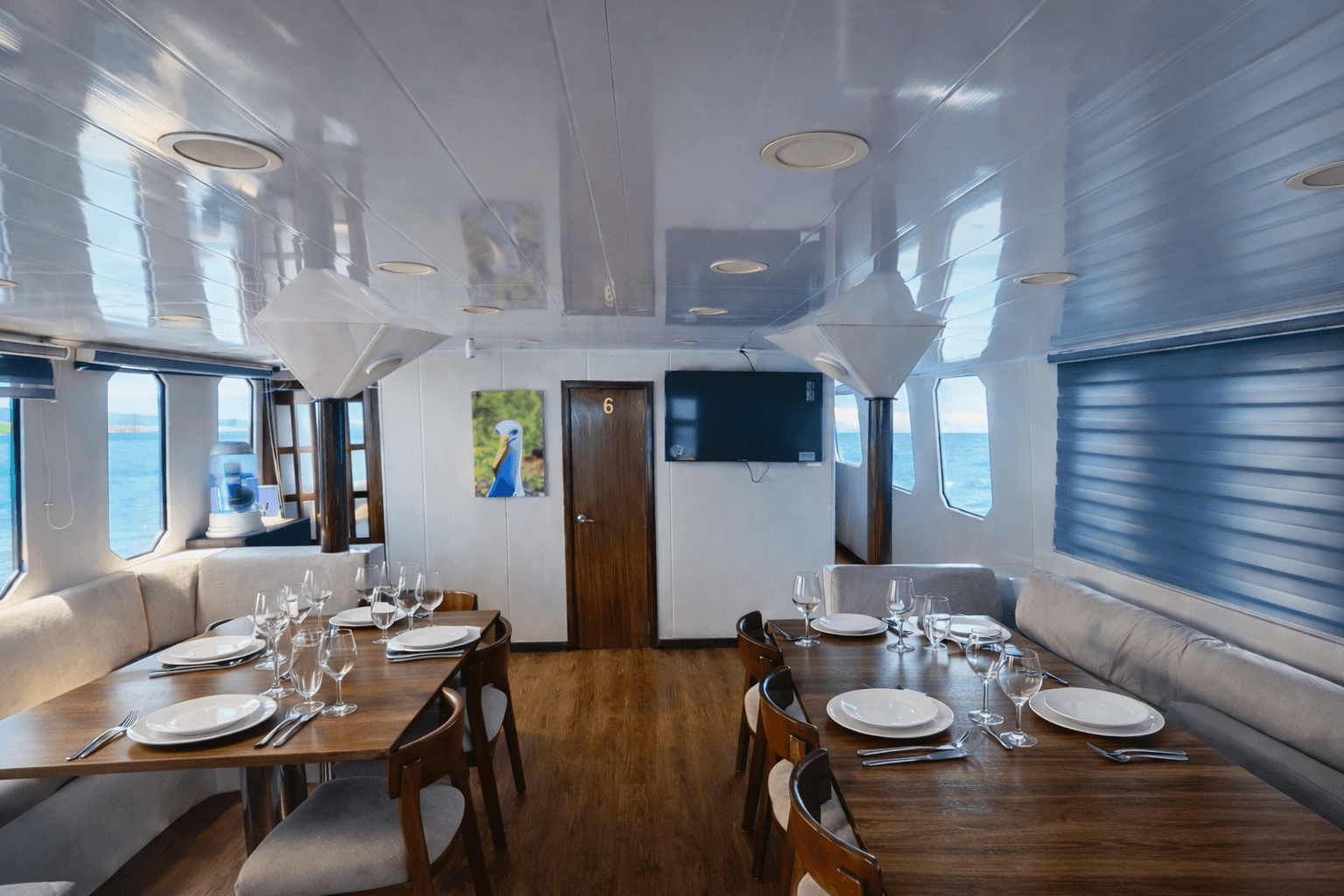
Public Areas
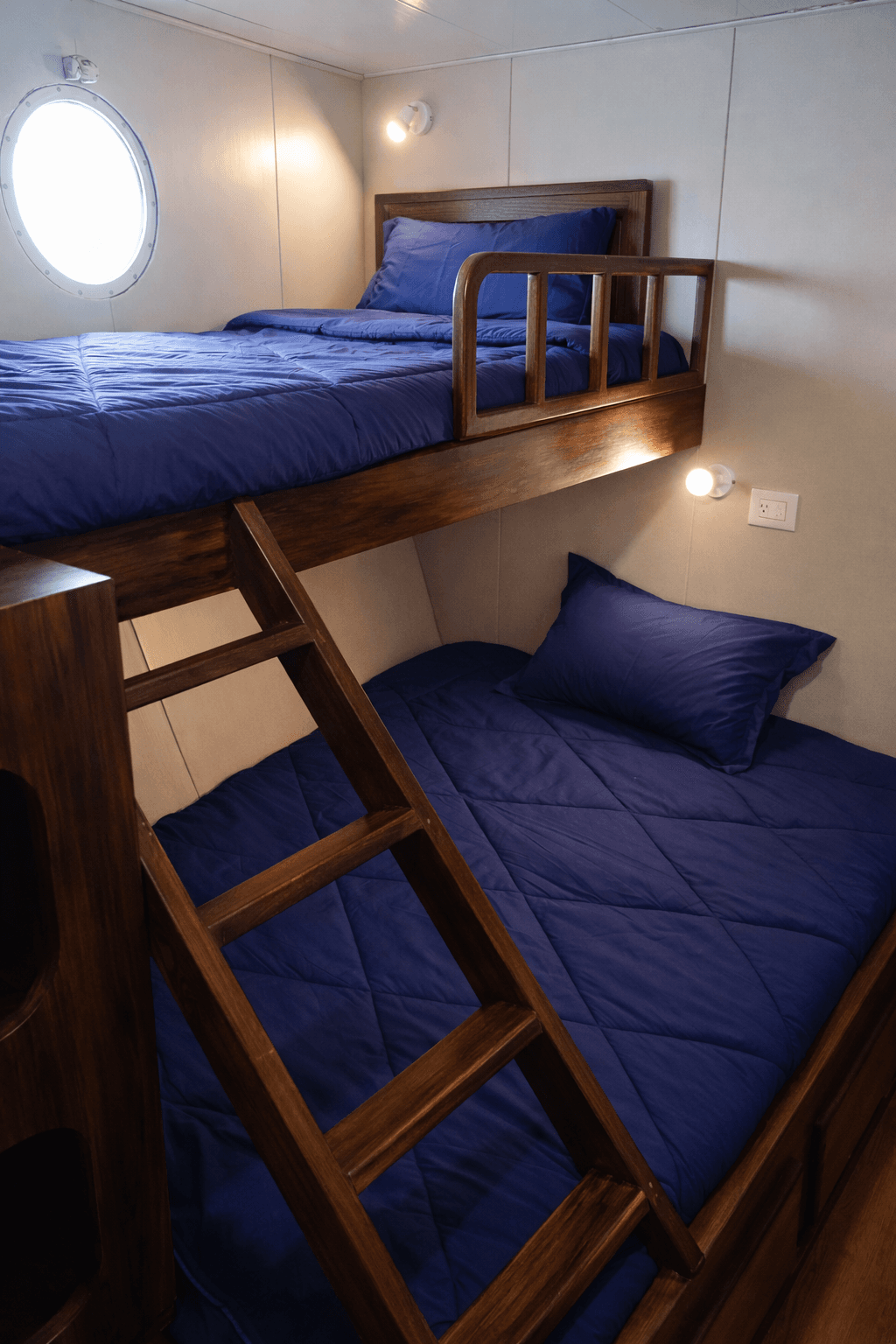
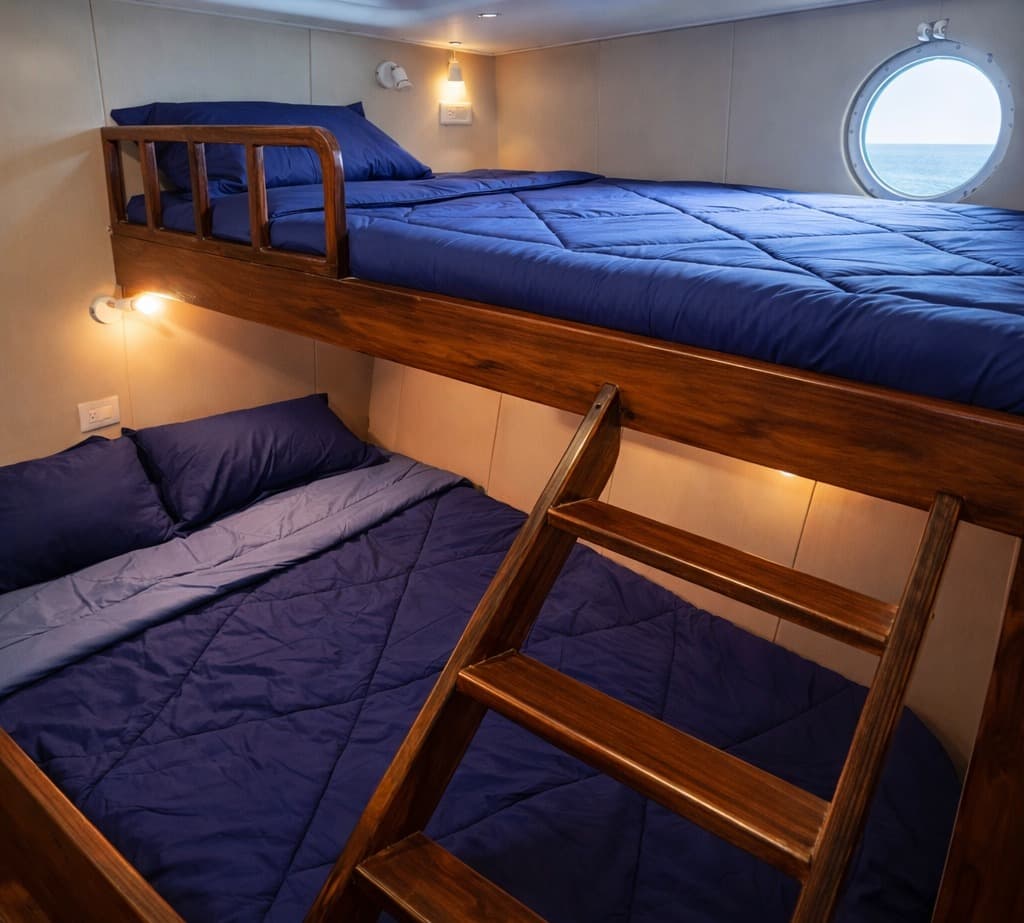
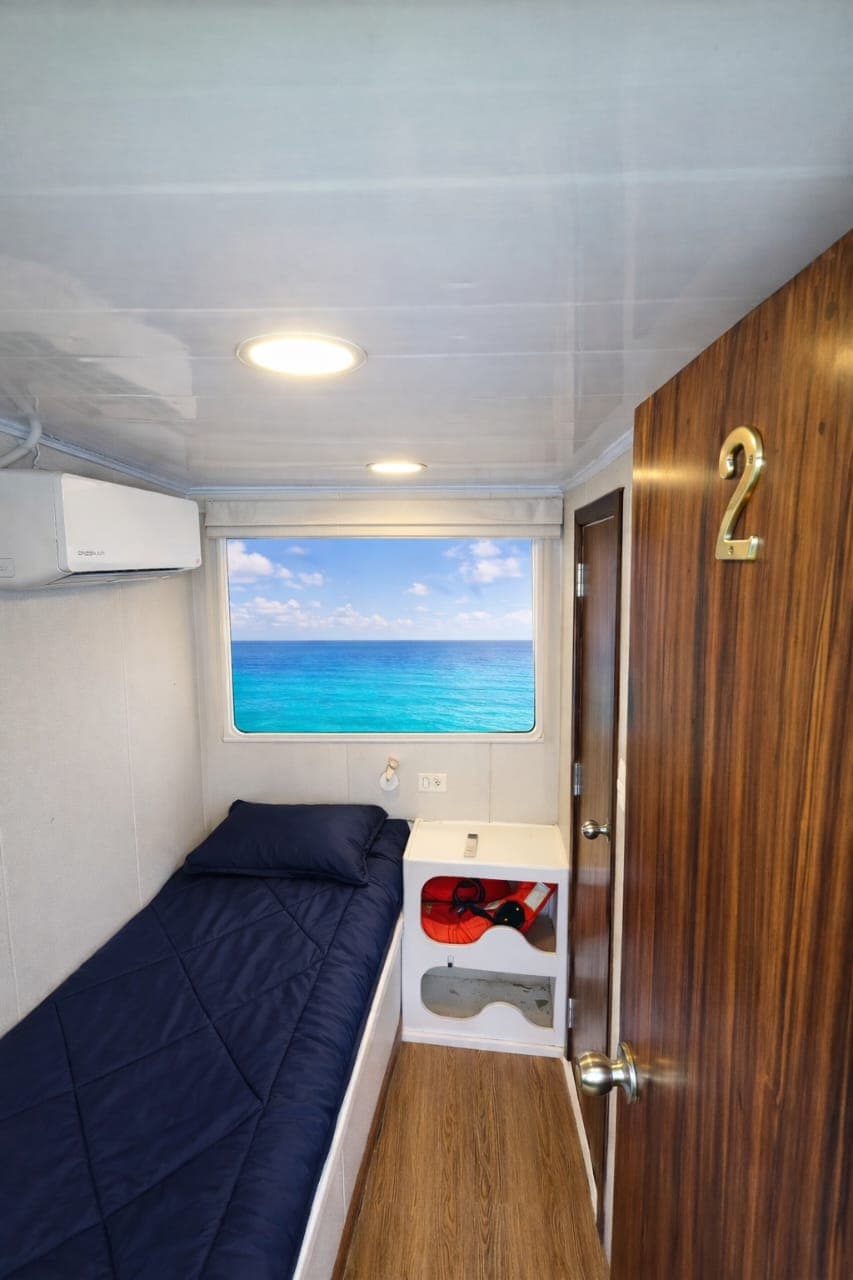
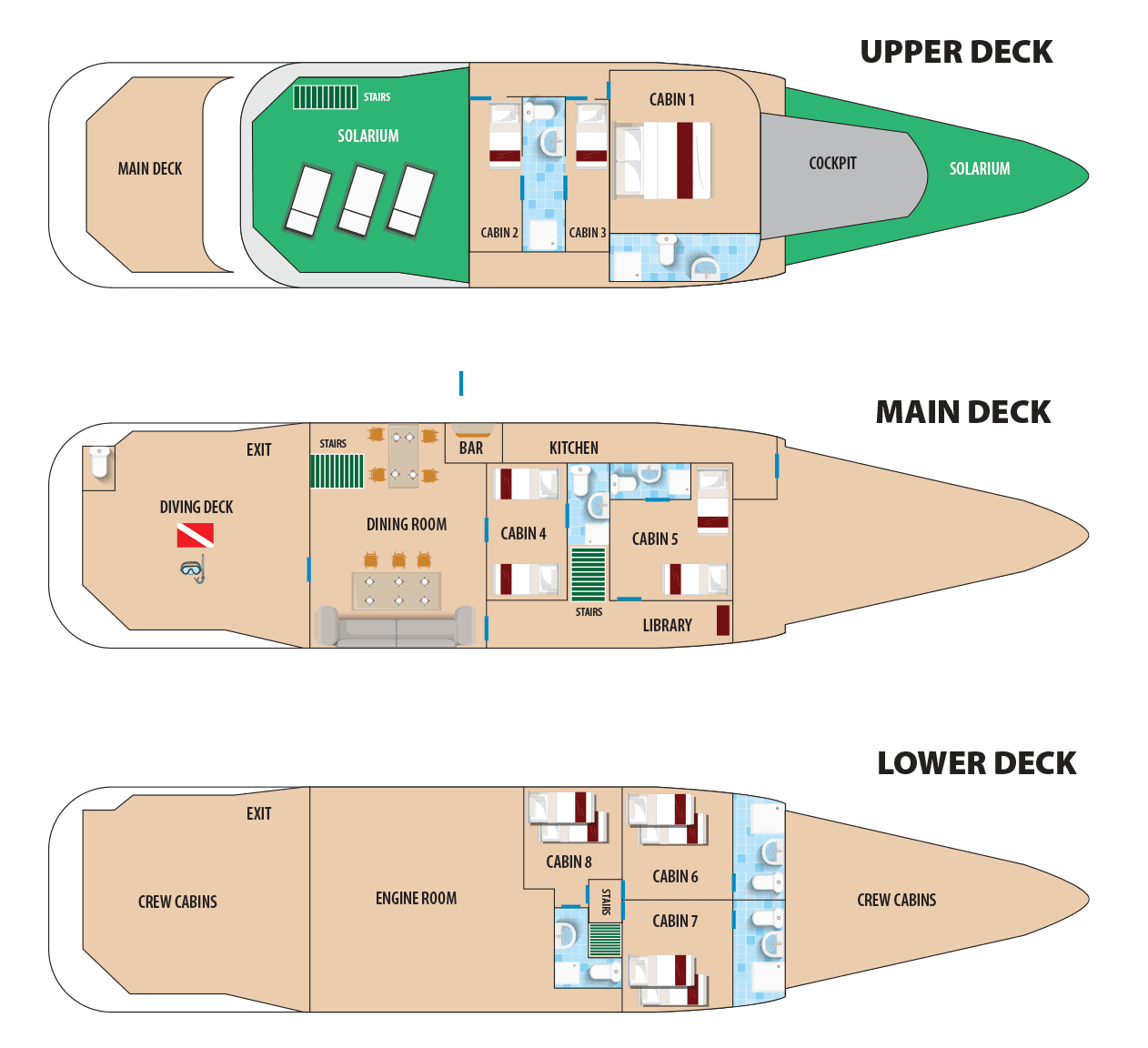
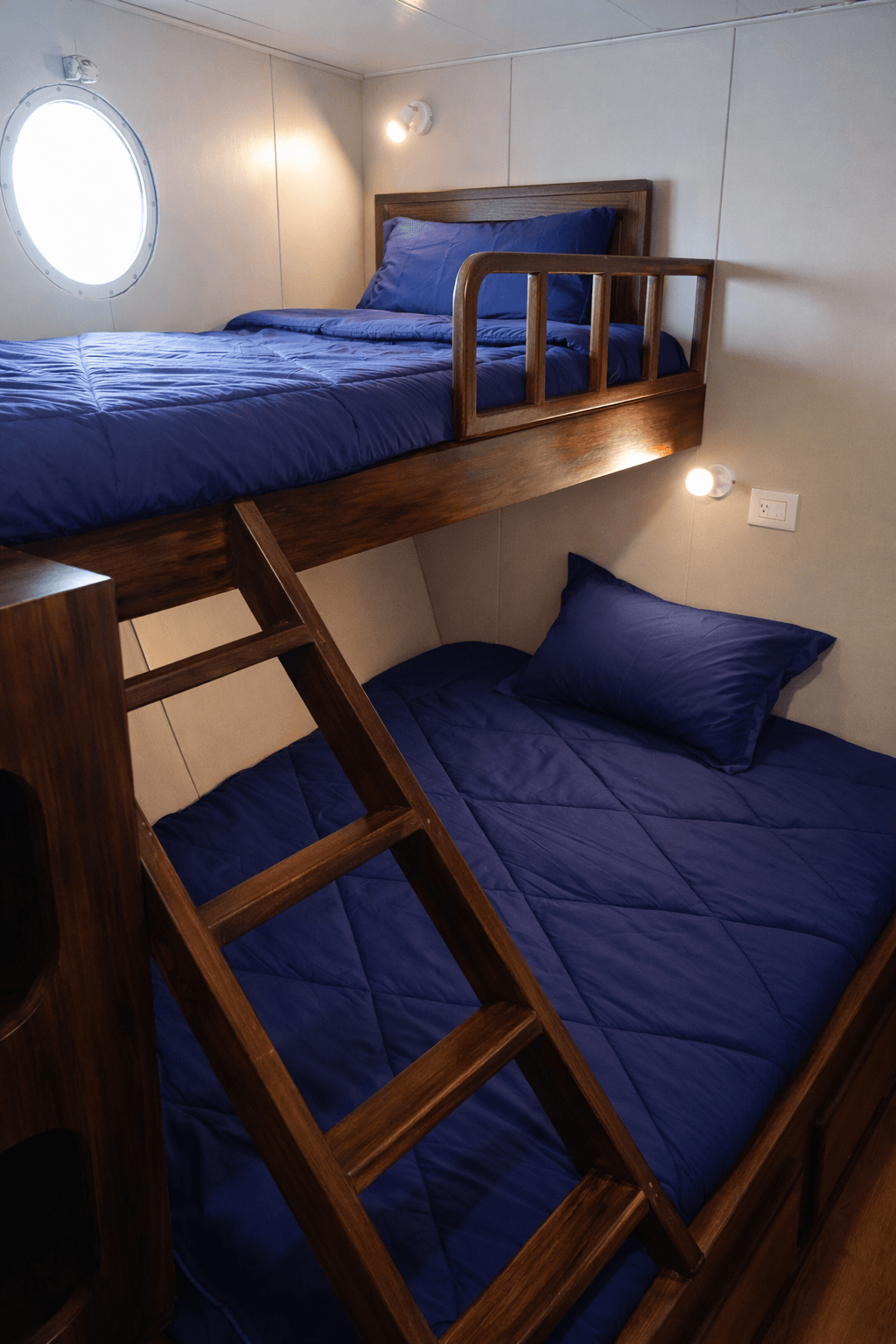
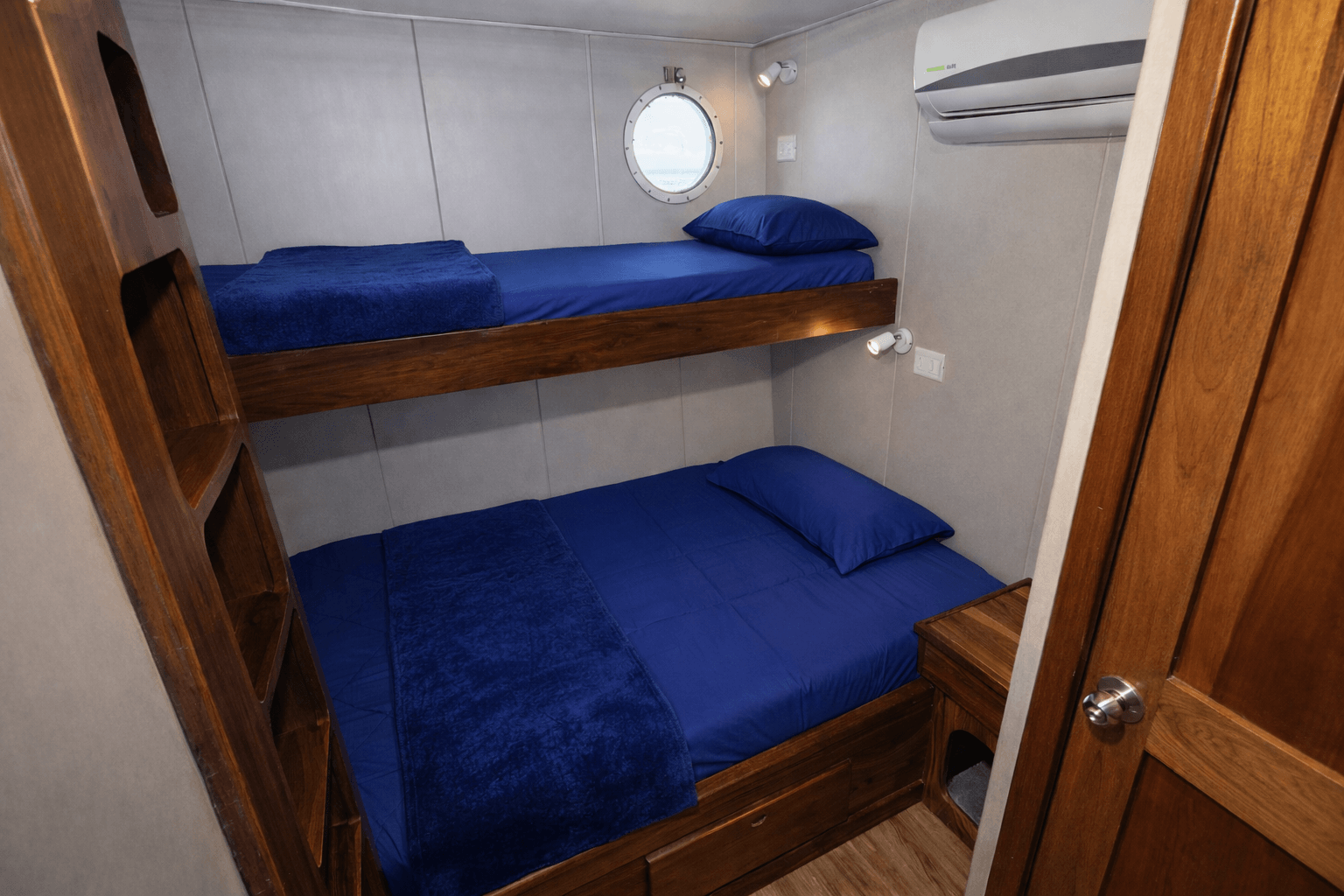
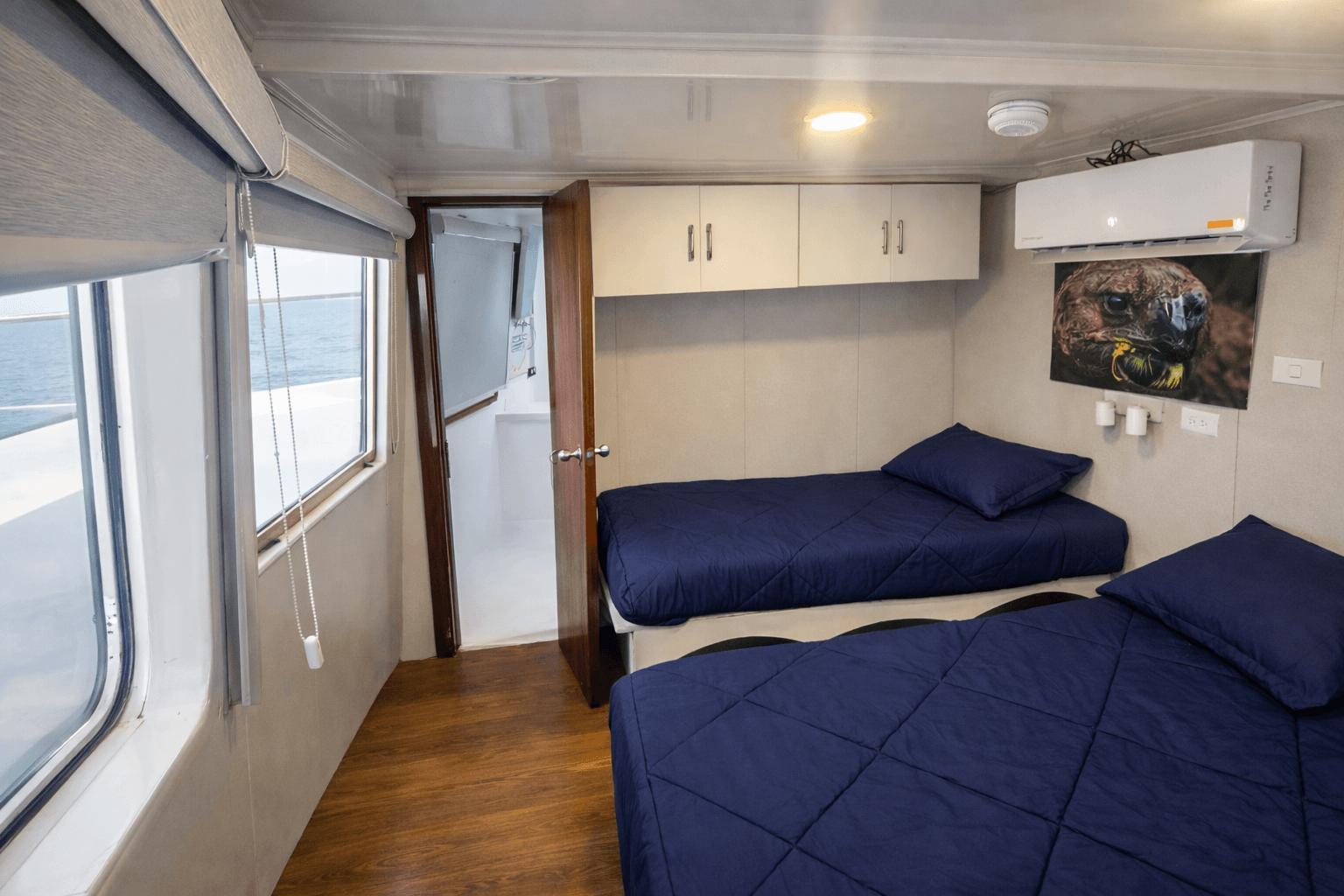
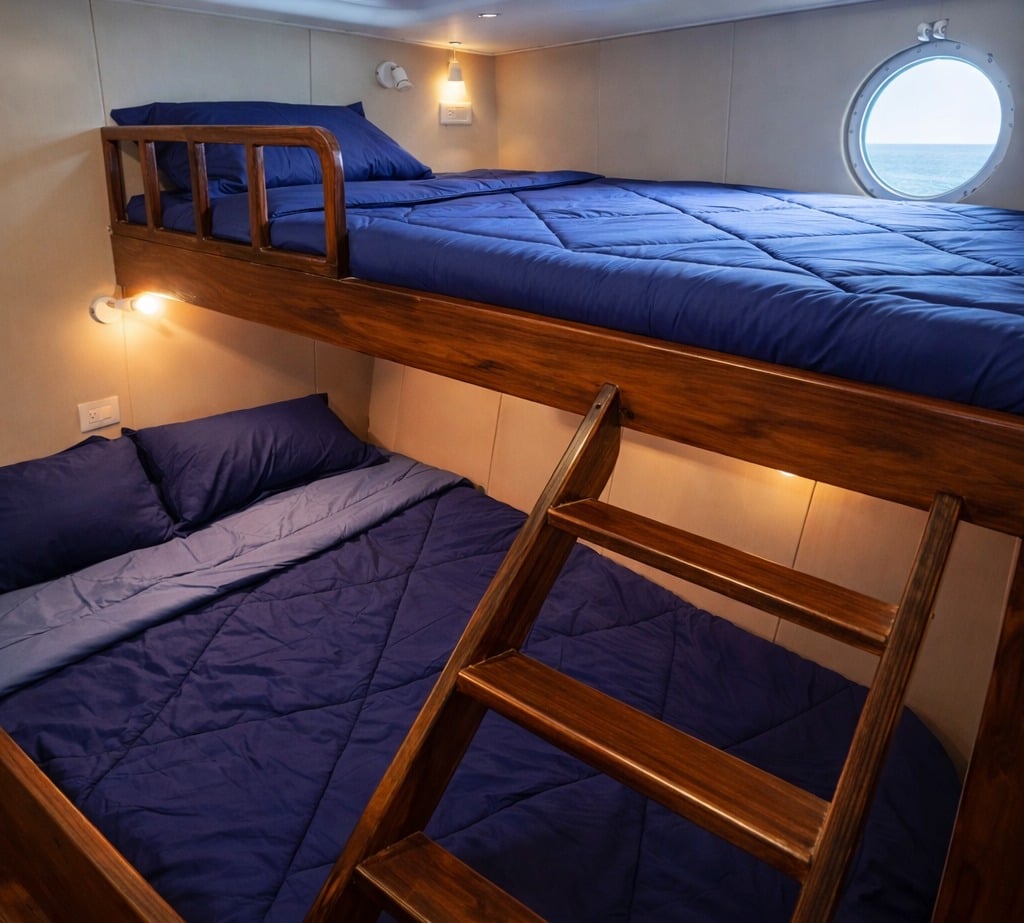
Bunk beds cabin
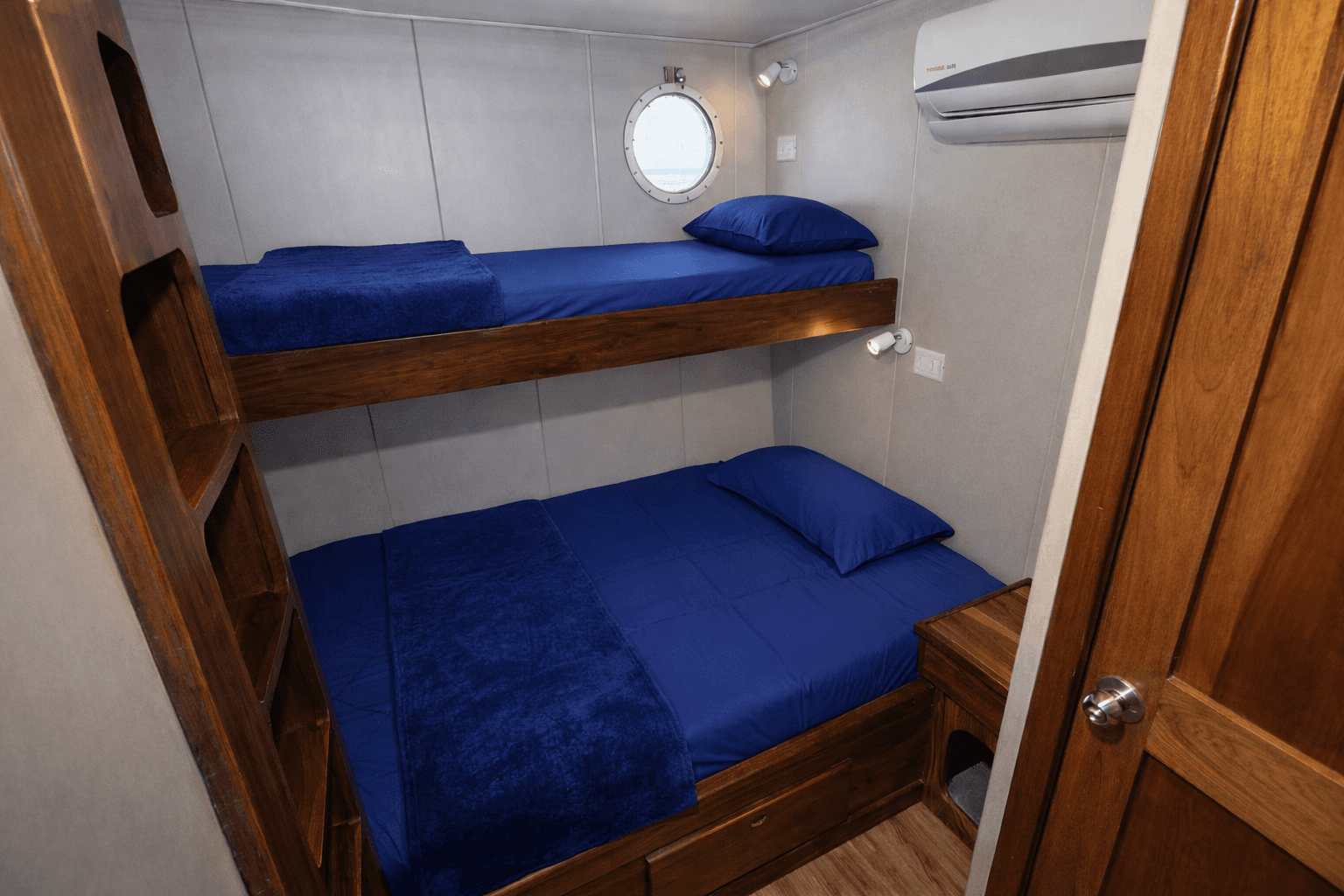
Bunk beds cabin
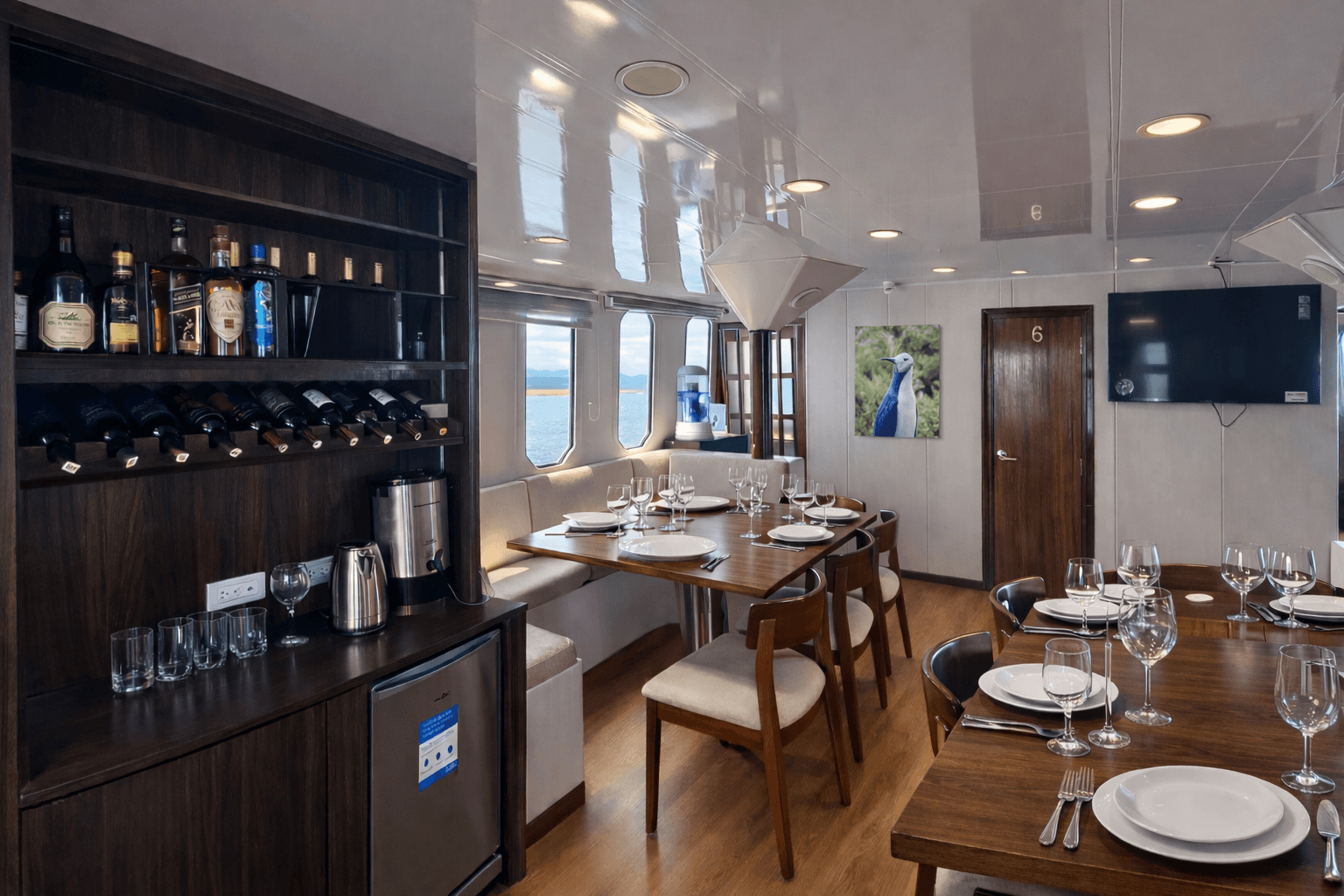
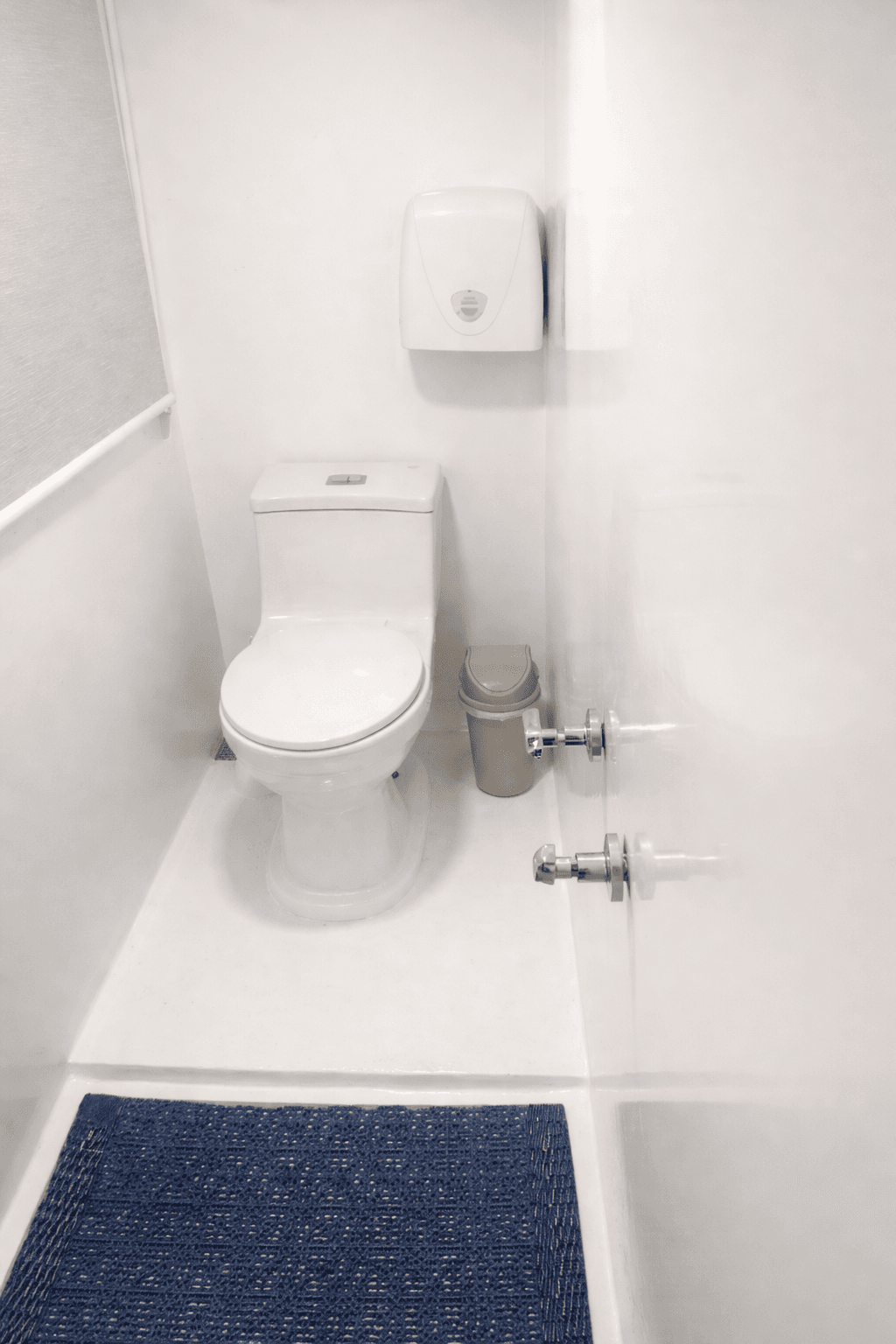
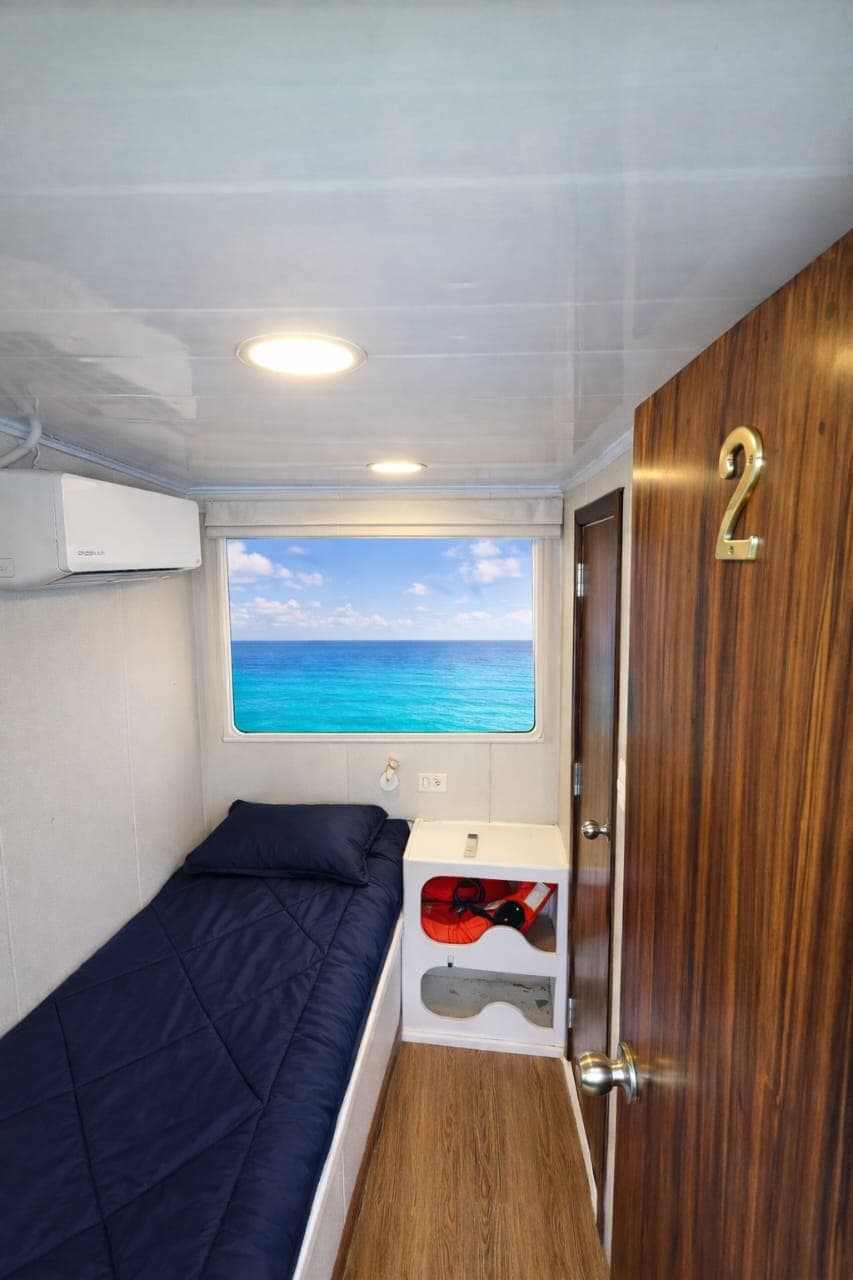
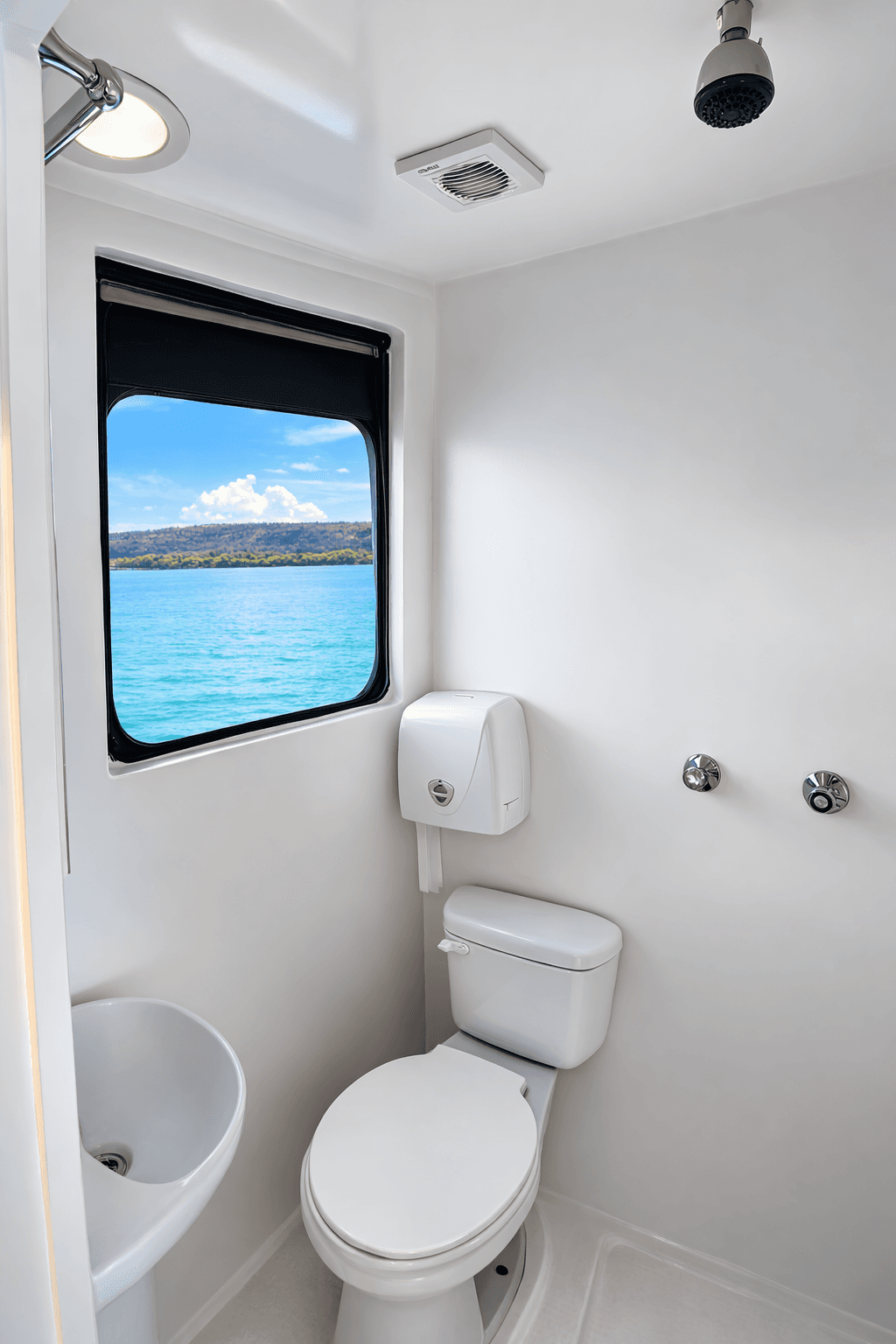
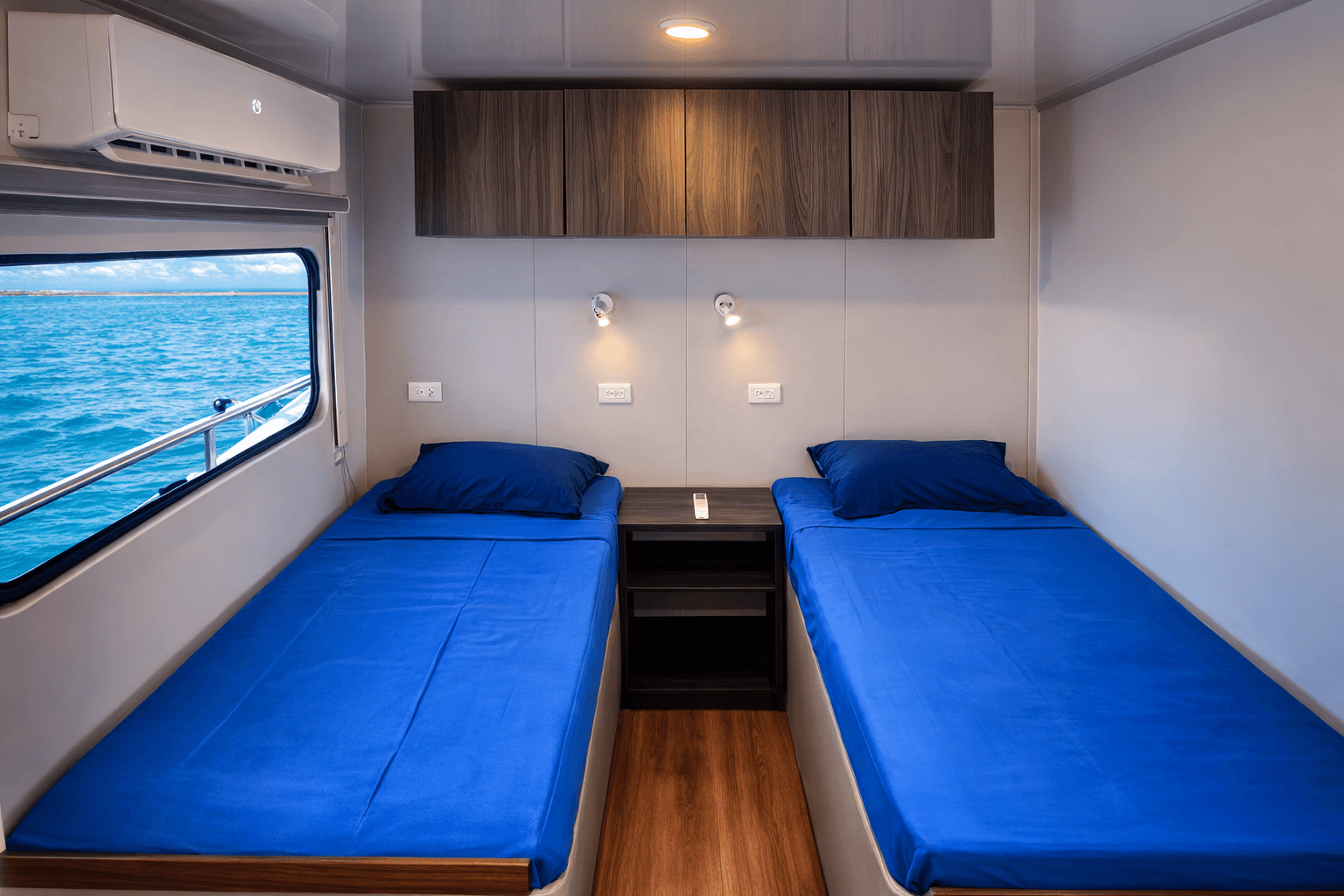
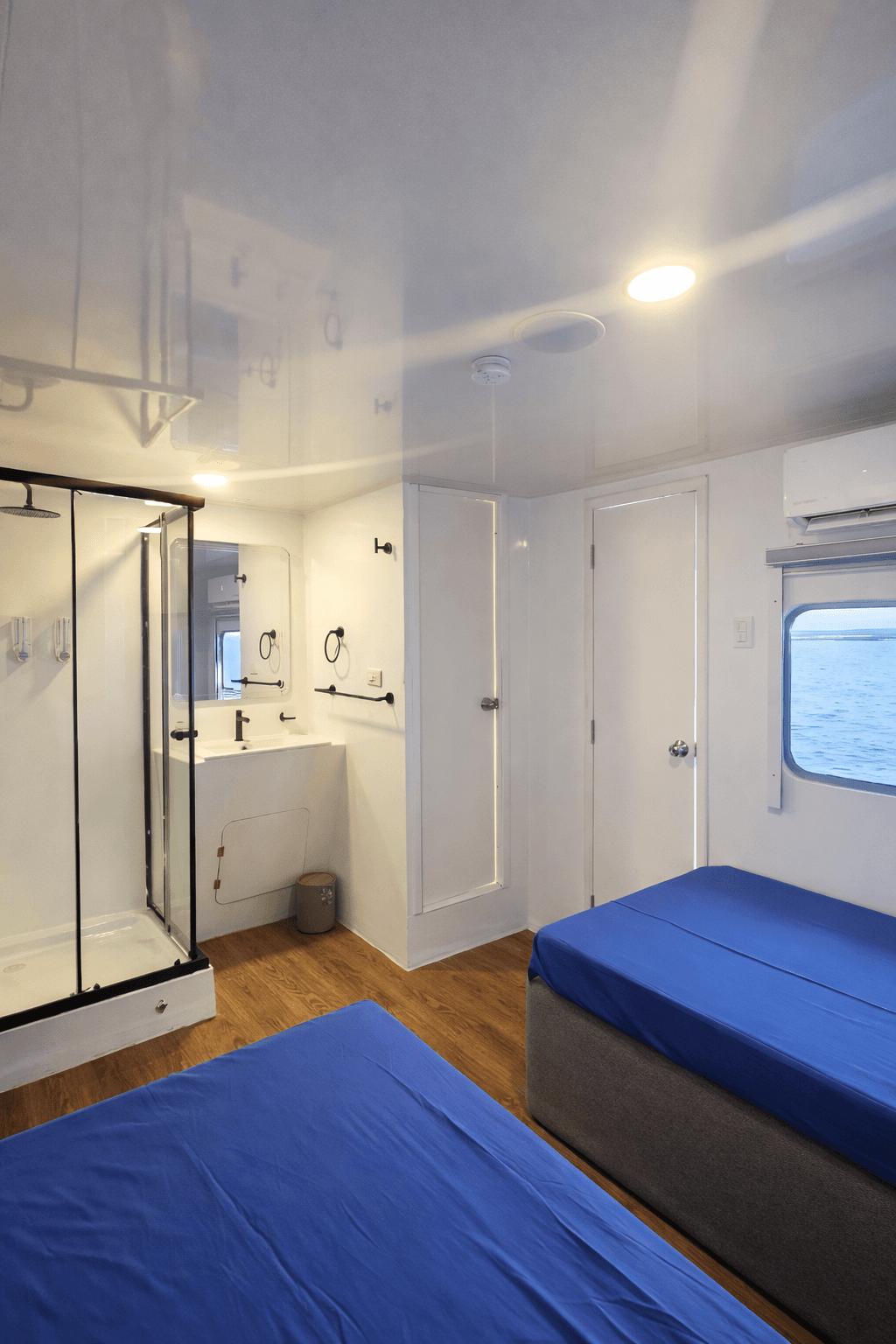
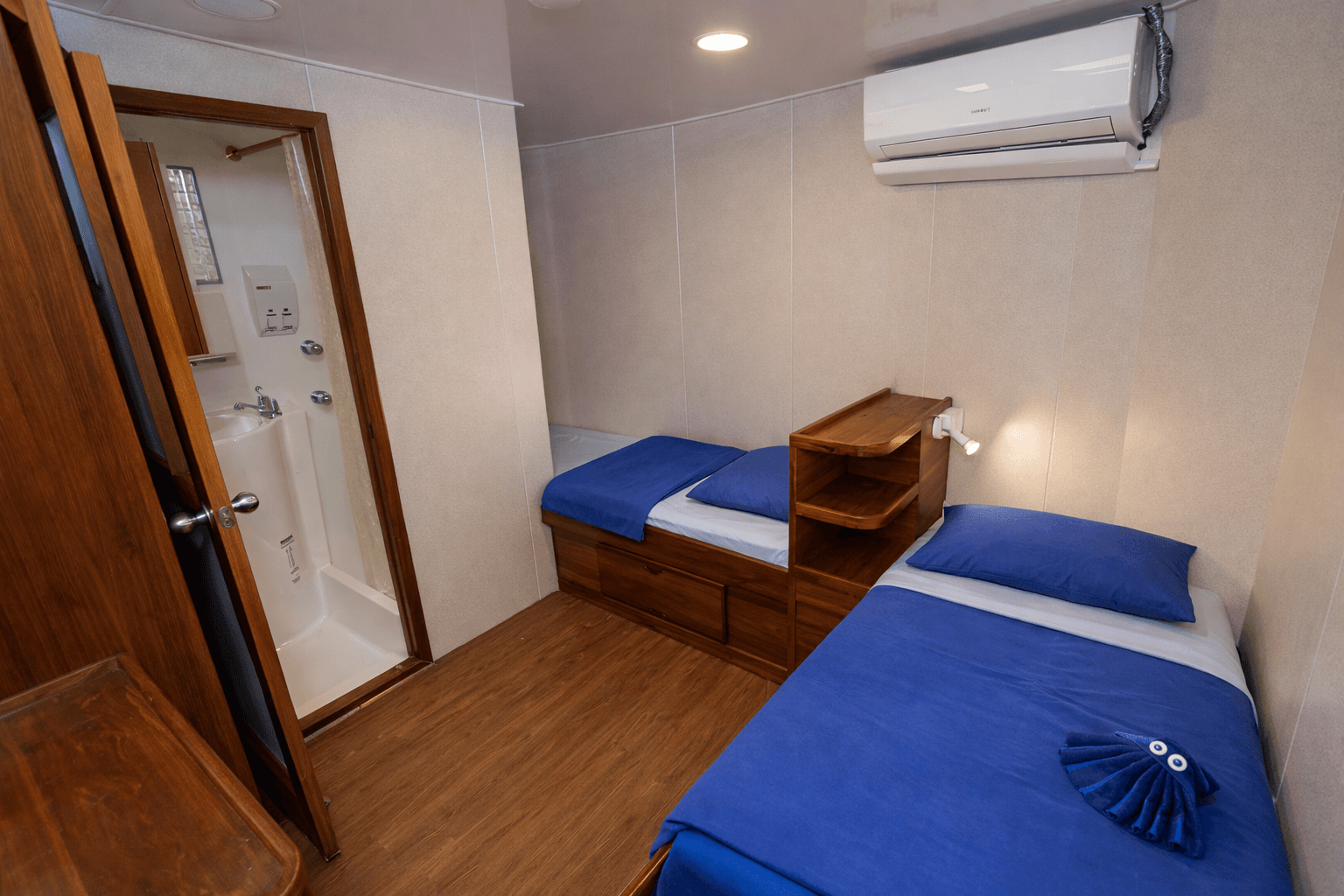
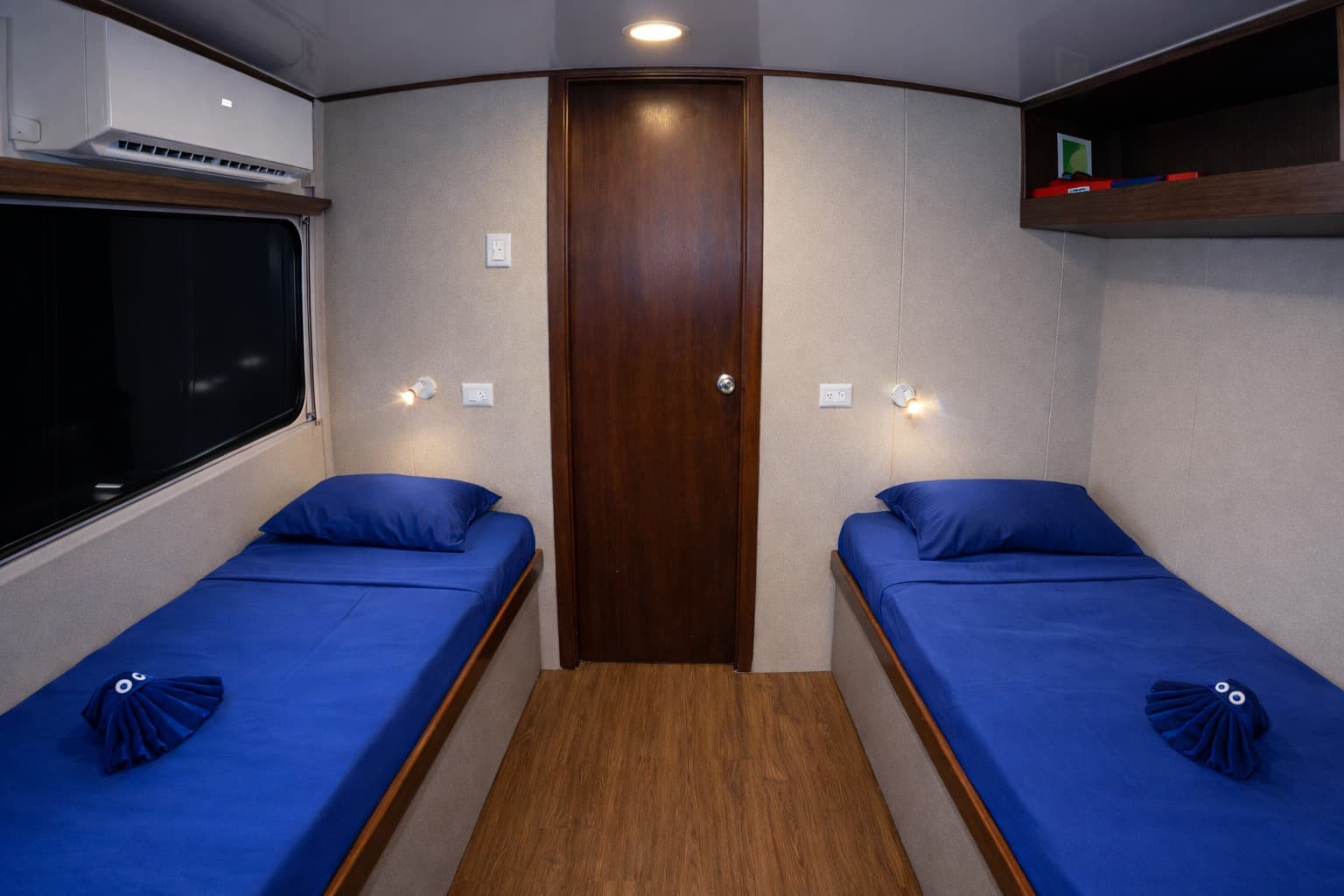

Public Areas
Public Areas
Public Areas
Bunk beds cabin
Bunk beds cabin
Dec 22-29 · 8 days · 8 cabins left
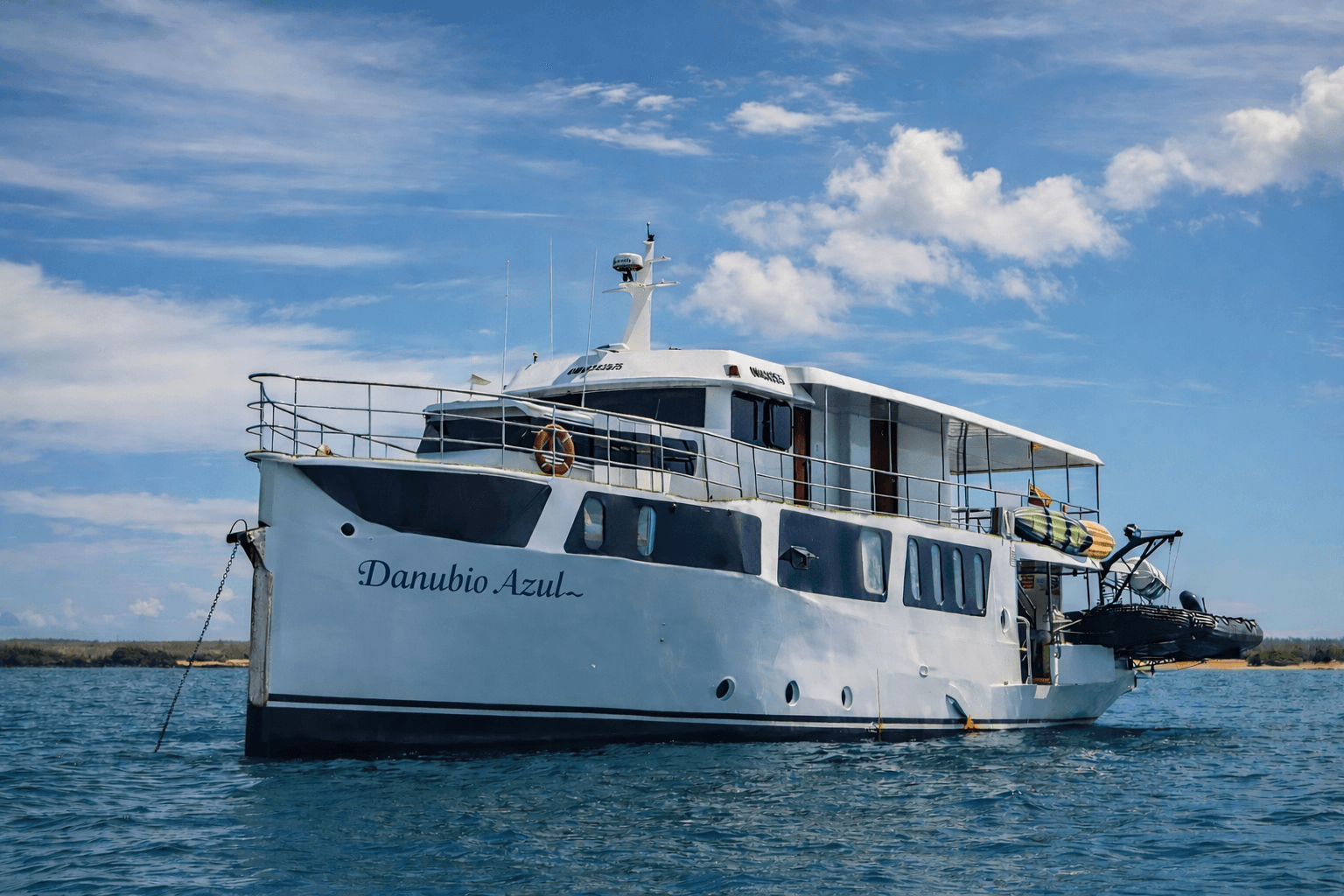
🛥 M/Y Danubio Azul is a tourist Superior Yacht with incredible 8 days naturalist and diving itineraries! 🐢🦈⚓
✓Tourist superior class yacht with First Class service.
✓Features Actions Excellent and exclusive Diving and Naturalist Itineraries. (2 different itineraries)
✓We visited 9 islands during the 8 days on the naturalist itinerary.
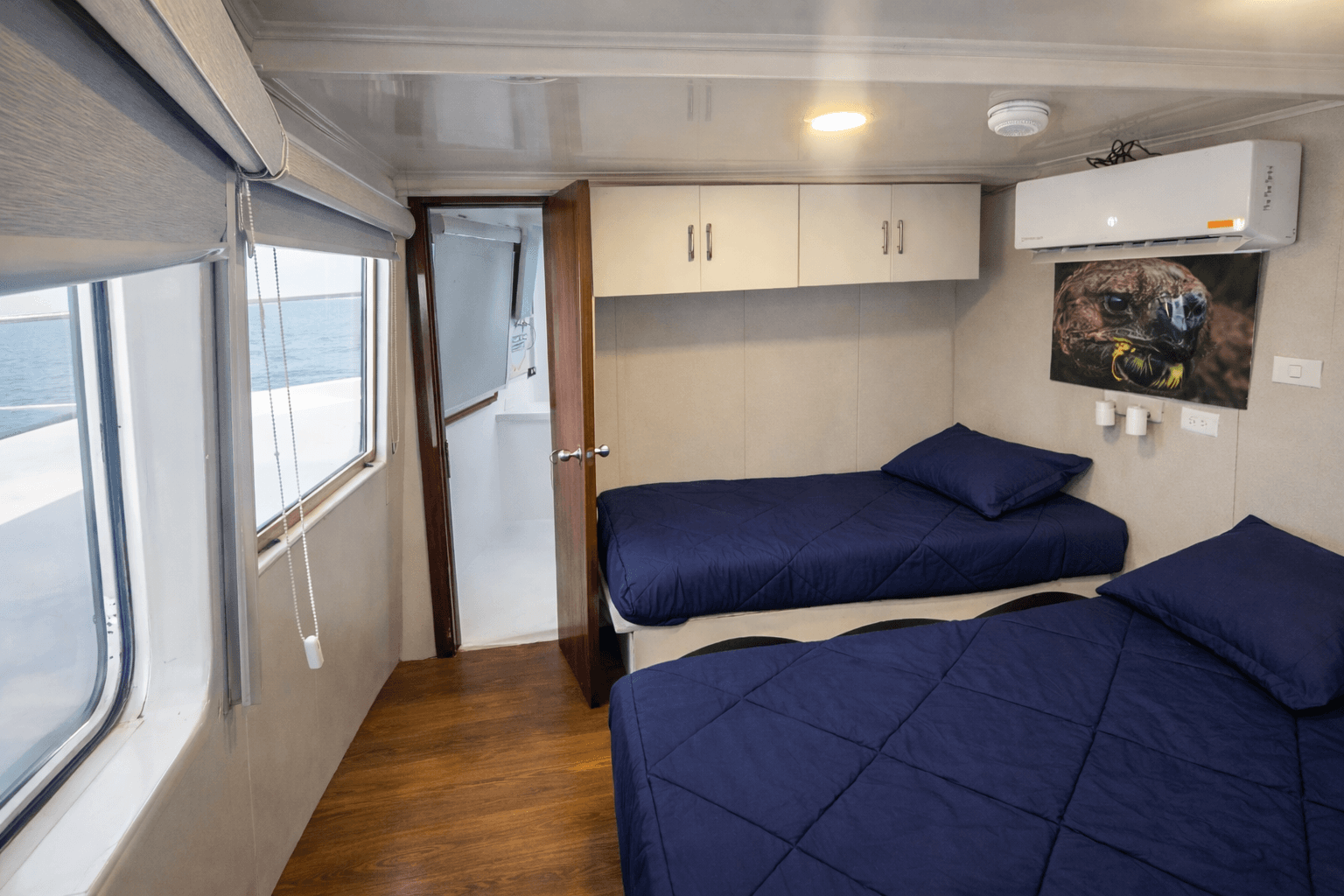
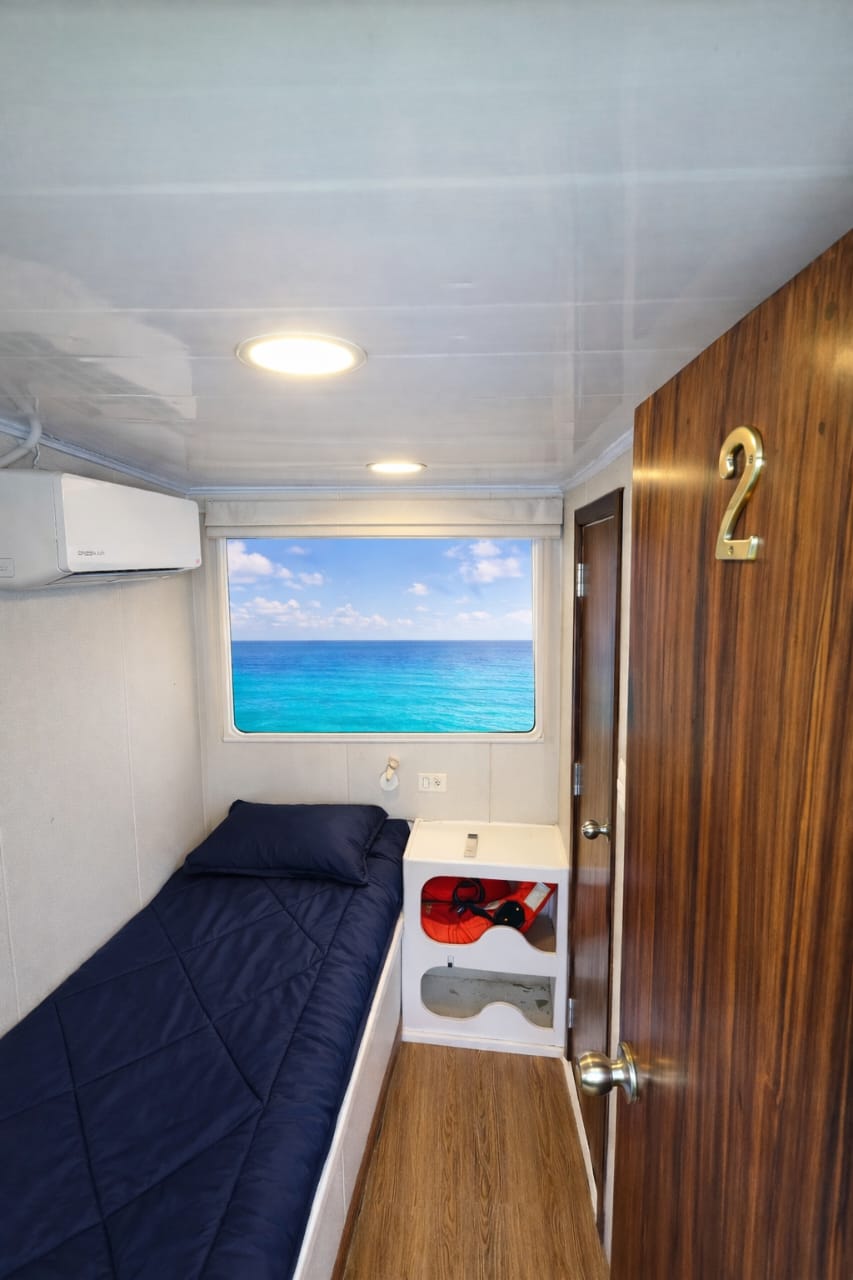
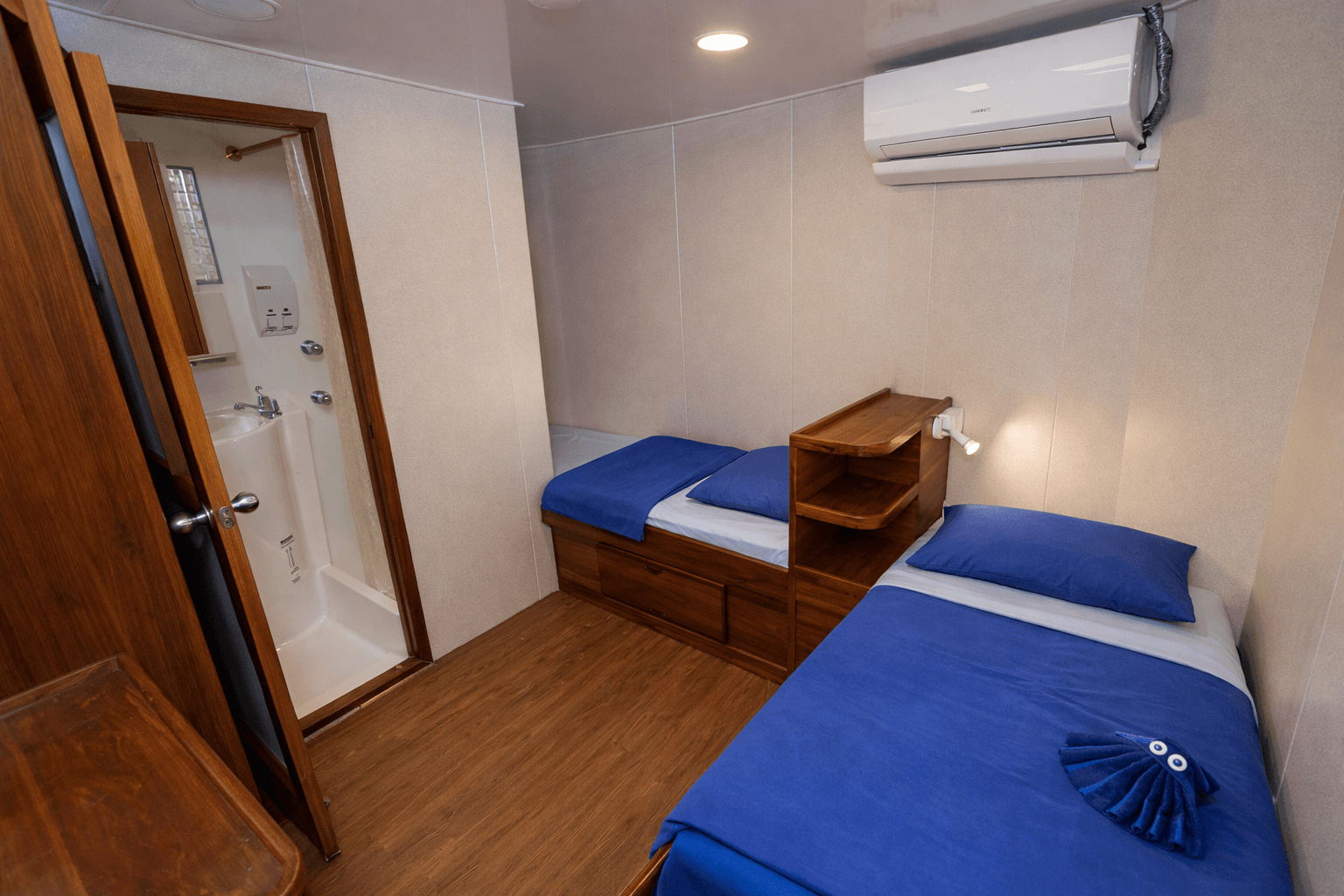
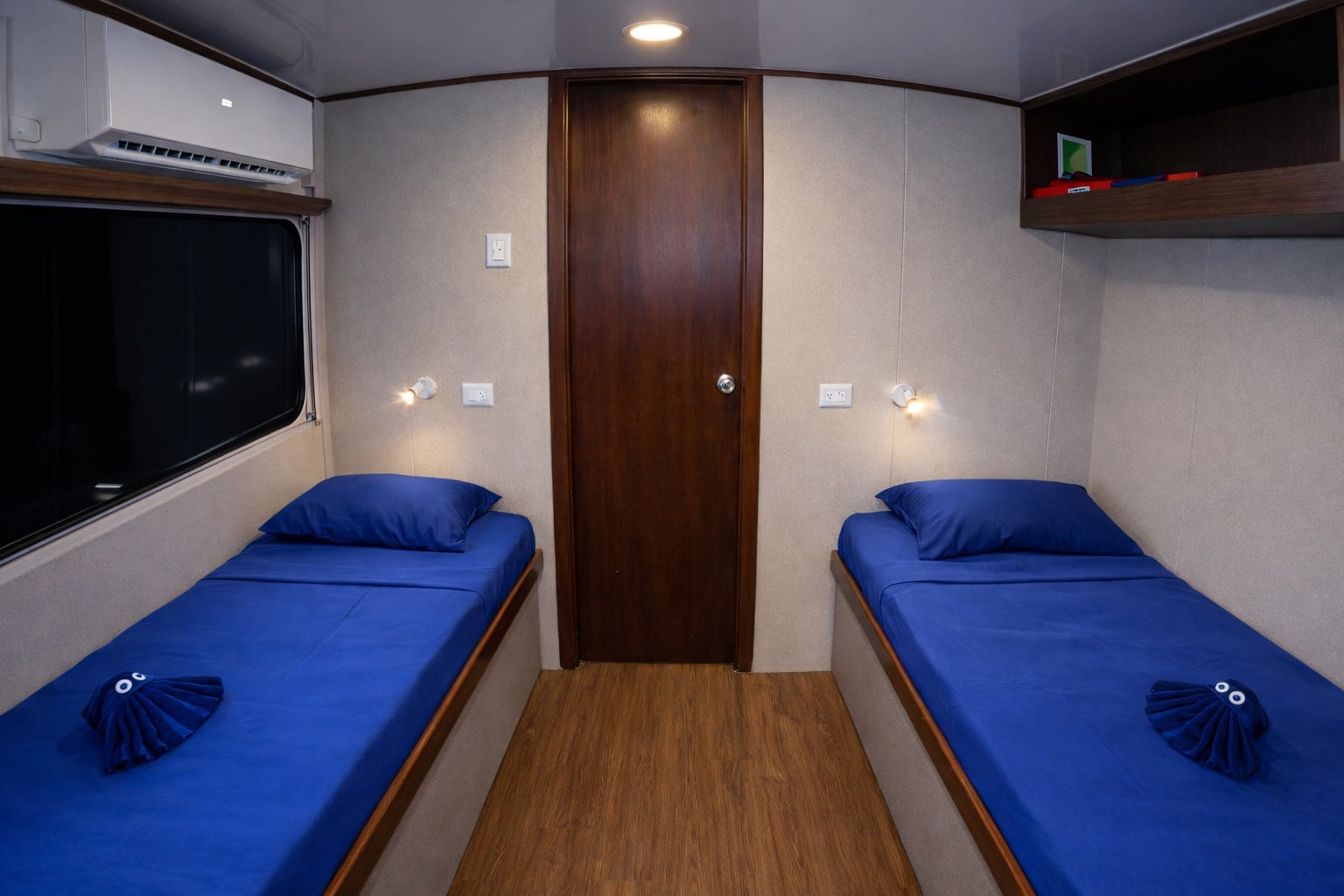
✓Stable yacht with comfortable cabins.
✓Friendly, professional and experienced crew.
✓Top Naturalist & diving guides.
✓3 days in Darwin and Wolf on the dive itinerary.
Availability shown is what the operator has on file for this departure.
Accommodation and comfort
Excursions and equipment

Hot tub
Hot tub

Kayaks
Kayaks

Outdoor dining
Outdoor dining

Scuba diving
Scuba diving

Wi-Fi
Wi-Fi
Morning
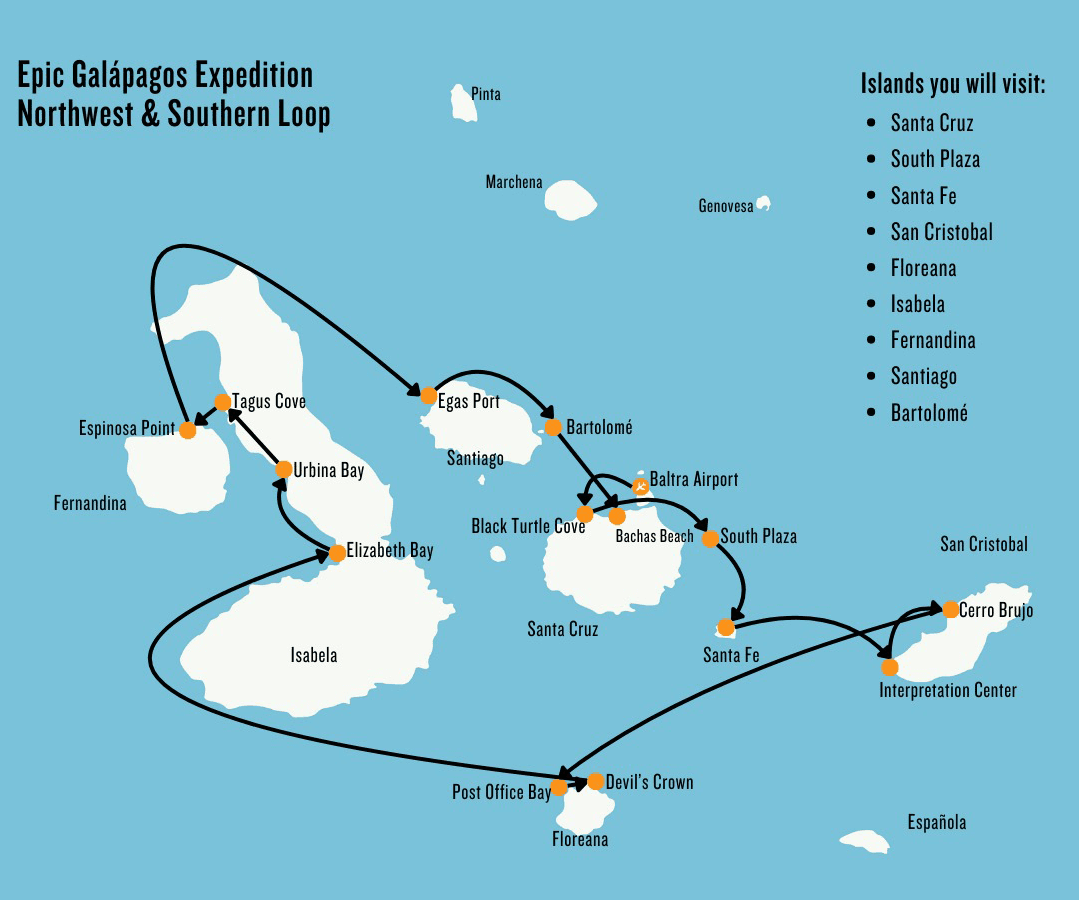
Baltra Island Airport, Baltra
Departure from Quito or Guayaquil to Baltra Island (2 ½ hour flight). Arriving in the Galapagos, passengers are picked up at the airport by our naturalist guides to take advantage of the time in the archipelago.
Afternoon
Santa Cruz Island, Black Turtle Cove, Santa Cruz
In this vast tidal lagoon system that extends nearly a mile inland, we encounter four distinct species of mangroves. As we navigate through the maze-like channels in our panga, we’ll come across numerous turtles, various types of herons, along with sharks and rays. The experience feels almost unearthly, as if we’re journeying back to the dawn of time.
Activities
Morning
Plazas
The Plaza Islets, two small islands located east of Santa Cruz, consist of North and South Plaza. On North Plaza, visitors can begin their journey through an impressive cactus forest that’s home to about 300 vibrant yellow and red land iguanas. During the dry season, these iguanas rely on the fruits and flowers of the opuntia cacti for survival. South Plaza offers a unique sighting of hybrid iguanas—a mix of marine and land species. At the island’s highest point, tropicbirds are visible. From June to January, the typically green and yellow vegetation transforms into a brilliant red landscape due to the blooming of the Sesuvium edmonstonei plant.
Activities
Afternoon
Santa Fe
Santa Fe Island features white sandy beaches bordered by sea lion colonies. As we follow the island’s trail, we pass through a unique cactus forest that provides a habitat for the Santa Fe land iguanas, the largest iguanas in the islands. This island is home to numerous species, including the Galapagos hawk, Galapagos snakes, rice rats (one of the few rodent species native to the Galapagos), various fish species, and one of the archipelago’s four mockingbird species.
Activities
Morning
San Cristóbal Island, Interpretation Centre, San Cristobal
The Interpretation Center is packed with fascinating information, providing an excellent overview of the Galapagos’ formation, its global importance, as well as the threats it faces and ongoing conservation efforts. Afterward, we’ll hike to Frigatebird Hill (Cerro Tijeretas), where we’ll have excellent views of both species of frigatebirds, along with a stunning panorama of the bay below.
Afternoon
San Cristóbal Island, Cerro Brujo, San Cristobal
As we approach the shore from our pangas, we’re immediately awed by the grandeur of the towering cliffs of ‘Cerro Brujo’ We can spend time relaxing on the beach alongside sea lions, snorkel from the shore, or take a stroll to a secluded lagoon where we may encounter black-necked stilts, ruddy turnstones, whimbrels, and white-cheeked pintails.
Activities
Morning
Floreana Island, Post Office Bay, Floreana
A brief walk from the beach takes us to the iconic Post Office Barrel, which is said to have been established in 1793 by Captain James Colnett. It remains the oldest active ‘post office’ in the Pacific. Whalers and fur sealers used to leave addressed letters in the barrel for others heading home to deliver. In keeping with this tradition, modern visitors often take letters to personally deliver them in their own countries.
Activities
Afternoon
Floreana Island, Cormorant Point, Floreana Island
Upon arrival to Punta Cormorant, a keen observer will notice that olivine, a volcanic crystal, has given the dark beach a delicate green tint. Our walk leads us past island-endemic Scalesia plants to a large, shallow lagoon that is often home to a striking group of pink greater flamingos. We then continue through a palo santo tree forest, eventually reaching a powdery white beach that serves as a nesting site for green turtles. As we wade barefoot in the shallow waters, we may spot diamond stingrays and white-tipped reef sharks.
Activities
Afternoon
Floreana Island, Devil's Crown, Floreana Island
One of the most popular snorkeling spots in the islands, Devil’s Crown is an eroded volcanic cone teeming with a rich variety of fish and marine life. We’ll swim alongside large schools of yellow-tailed surgeonfish, salemas, and creolefish, and with some luck, we may even encounter turtles, spotted eagle rays, parrotfish, and hammerhead sharks! The rugged ‘crown’ serves as a roosting site for boobies, noddies, tropicbirds, and frigatebirds.
Activities
Morning
Isabela Island, Elizabeth Bay, Isabela
Elizabeth Bay is situated on the east coast of Isabela Island and features several islets that can be explored by dinghy. These rocky islets are home to penguins and blue-footed boobies. With its clear waters and rich marine life, the area is an ideal spot for snorkeling, offering views of vibrant fish schools, sea lions, and possibly even sharks.
Activities
Afternoon
Isabela Island, Urbina Bay, Isabela
Urbina Bay is situated at the base of Alcedo Volcano on the west coast, nestled between Tagus Cove and Elizabeth Bay. In 1954, a significant uplift occurred here, causing the land to rise more than 16 feet. This geological shift extended the coastline by half a mile, leaving marine life stranded on the newly formed shore. The bay is also an excellent spot for snorkeling.
Activities
Morning
Isabela Island, Tagus Cove, Isabela
We begin with a dry landing on Galapagos’ largest island, where we’ll explore the history of its five volcanic eruptions. The trail leads us to Darwin’s saltwater crater lake, offering stunning views of lava fields and volcanic formations. After retracing our steps, we’ll take a dinghy ride along a shoreline teeming with marine life, where we can observe a variety of seabirds, including Blue-footed Boobies, Brown Noddies, terns, Flightless Cormorants, and, depending on the season, a large colony of Galapagos Penguins, which are only 35 cm tall—the only penguin species in the world to live in the tropics.The population of these penguins is around 2,000, most of which inhabit the western part of Isabela, with some further south. We’ll also have the chance to snorkel in deeper waters.
Activities
Afternoon
Fernandina Island, Punta Espinoza, Fernandina
From Espinosa Point, visitors can enjoy expansive views of Isabela Island across the Bolivar Channel, a region renowned for having some of the richest diversity of endemic marine life in the Galapagos. This area is home to the largest, most primitive-looking marine iguanas, which can be seen alongside sea lions and Sally Lightfoot crabs. Fernandina offers an excellent chance to observe flightless cormorants at their nesting sites, as well as Galapagos penguins and the island’s apex predator, the Galapagos hawk. The island’s landscape is primarily covered by Pa-hoe-hoe and AA lava formations, and inland vegetation is sparse, with only a few brachycereus cacti. Along the shore, mangroves can be found.
Activities
Morning
Santiago Island, Puerto Egas, Santiago
Wet landing. Egas Port features a black volcanic sand beach, which was visited by Darwin in 1835. The trail begins with volcanic ash (eroded tuff) and continues over rough terrain made up of basaltic volcanic rock. The striking, layered landscape along Santiago’s shore is home to a variety of wildlife, including the unusual yellow-crowned night heron, as well as marine creatures like lobsters, starfish, and marine iguanas grazing on algae beds alongside Sally Lightfoot crabs. It’s easy to spot colonies of endemic fur seals swimming in the cool, volcanic rock pools.
Activities
Afternoon
Bartholomew
Wet landing. Egas Port features a black volcanic sand beach, which was visited by Darwin in 1835. The trail begins with volcanic ash (eroded tuff) and continues over rough terrain made up of basaltic volcanic rock. The striking, layered landscape along Santiago’s shore is home to a variety of wildlife, including the unusual yellow-crowned night heron, as well as marine creatures like lobsters, starfish, and marine iguanas grazing on algae beds alongside Sally Lightfoot crabs. It’s easy to spot colonies of endemic fur seals swimming in the cool, volcanic rock pools.
Activities
Morning
Santa Cruz Island, Bachas Beach, Santa Cruz
Located on the northern shore of Santa Cruz, Las Bachas is a popular swimming beach. One of the few remaining traces of the U.S. World War II presence in the Galapagos, a floating pier, can be spotted here. The area is home to flamingos, Sally Lightfoot crabs, hermit crabs, black-necked stilts, and whimbrels. Sea turtles also nest along the beach.
Activities
Afternoon
Baltra
Baltra airport
Payment Policies •In the case of confirmed reservations, the client must guarantee the spaces with a 30% deposit. •The difference, i.e., 70%, must be paid 60 days before the operation date; otherwise, Galapagos Experience may release the spaces.
Cancellation Policies •If canceled before 121 days, a penalty of 30% of the deposit applies in the case of a diving cruise. •If canceled 120 to 0 days before the operation, a 100% penalty applies.
No payment required • Free cancellation